

The Dining Table Dilemma
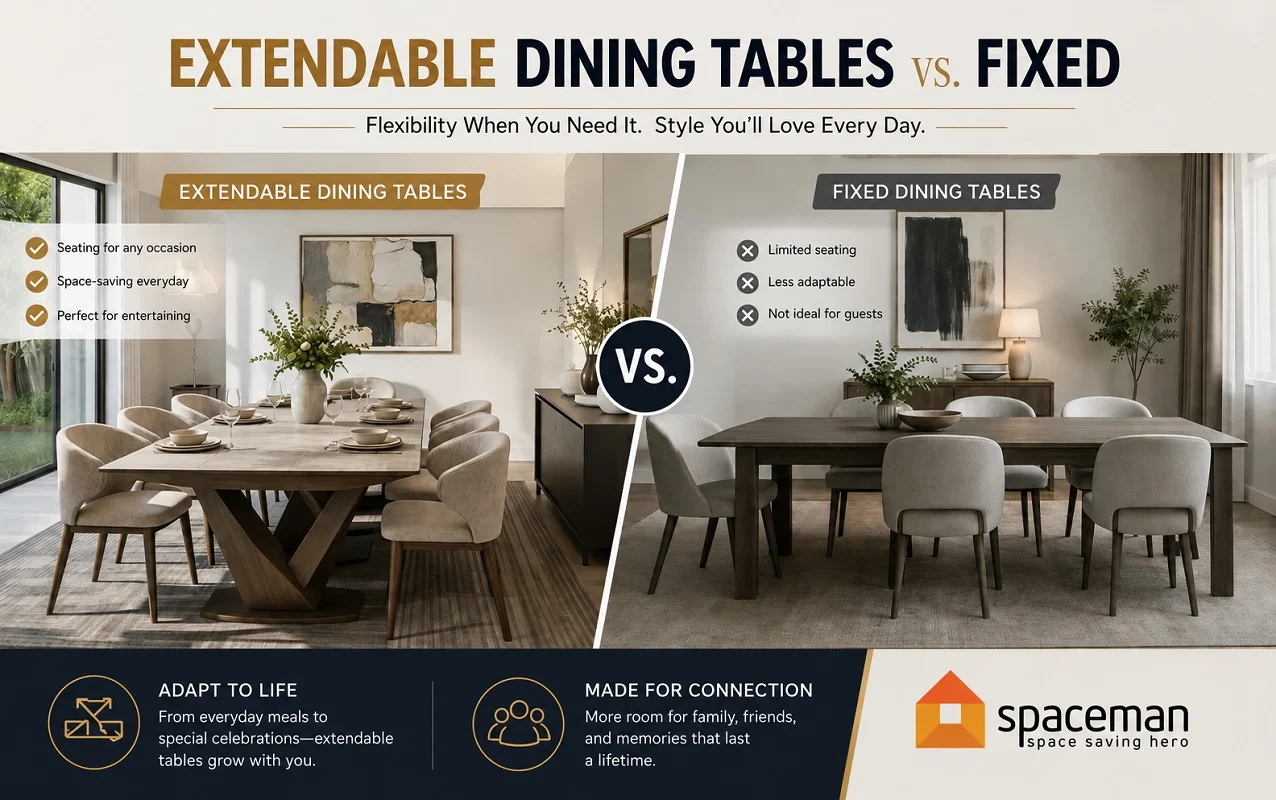
When it comes to furnishing your home, the dining table is one of the most important investments you will make. It anchors the room, sets the mood, and serves as the gathering point for meals, conversations, and memories. Extendable dining tables have emerged as a popular solution for modern homeowners who want both flexibility and style. Whether you live in a compact apartment or a spacious villa, the right table can completely transform how you use your dining space. Understanding the difference between extendable and fixed options helps you make a smarter, longer-lasting choice.
What Makes a Table “Extendable”?
An extendable dining table is designed with a built-in mechanism that allows it to increase in length or width when needed. This is typically achieved through leaf inserts, butterfly extensions, or pull-apart designs hidden beneath the tabletop. When not in use, the table sits at its standard compact size. When guests arrive or family gatherings happen, you simply open or pull the extension and add the leaf. The process is usually quick, taking only a minute or two. This clever engineering makes the table adaptable to your lifestyle without requiring you to own two separate pieces of furniture.
Fixed Tables: The Classic Choice
Fixed dining tables are exactly what the name suggests — a single, stationary surface with no moving parts or extensions. They come in every shape and size, from small round bistro tables to long rectangular farmhouse styles. Their biggest advantage is structural simplicity. Because there are no mechanisms, joints, or extension tracks, fixed tables tend to be more solid and easier to maintain over time. They also tend to be slightly more affordable at entry-level price points. However, what you gain in simplicity, you sacrifice in adaptability — a fixed table will never seat more guests than its original design allows.
Space Efficiency in Modern Homes
One of the strongest arguments for choosing an extendable model is space efficiency. Modern urban homes, especially in cities like Ahmedabad, often feature compact dining areas where every square foot matters. A table that fits four people on a regular Tuesday night but expands to seat eight during Diwali or a family get-together is genuinely valuable. You do not need to crowd the room with a large fixed table just to prepare for occasional large gatherings. Instead, the room stays open and breathable on normal days, and the table rises to the occasion when it truly matters. Smart space planning starts with smart furniture.
Extendable Dining Tables and Your Lifestyle
Extendable dining tables are particularly well-suited for families whose social lives are dynamic and unpredictable. If you host frequently, have extended family visiting regularly, or simply enjoy entertaining friends on weekends, flexibility becomes a daily necessity rather than a luxury. A table that grows with your needs means you are never caught without enough seating, and you never have to drag in extra folding tables that look mismatched. Beyond practicality, it also reflects a thoughtful approach to how you live — choosing furniture that works for you rather than forcing your lifestyle to work around your furniture.
Styles and Materials Available
Both extendable and fixed dining tables come in a wide range of styles, so aesthetics should not be a limiting factor in your decision. Extendable models are available in solid wood, engineered wood, marble, glass, and ceramic finishes. You can find Scandinavian minimalist designs, mid-century modern silhouettes, and even rustic farmhouse styles with extension capabilities built in seamlessly. The best manufacturers ensure that the extension leaf matches the table surface perfectly, making it look like one continuous piece when open. Style-conscious buyers no longer have to choose between good looks and smart functionality — modern design has made it possible to have both.
How the Extension Mechanism Works
The most common extension mechanism is the butterfly leaf, where a hidden leaf folds out from the center of the table when the two halves are pulled apart. Another popular option is the drop-in leaf, where you manually insert a separate panel into the gap. Some tables feature self-storing leaves tucked underneath the tabletop, while others use a synchronized slide system where both ends extend simultaneously. Each mechanism has its pros and cons regarding ease of use, durability, and how well the seam blends when extended. When shopping, always test the mechanism in-store or check detailed product videos to ensure it operates smoothly.
Durability and Long-Term Value
A common concern buyers have about extendable tables is whether the moving parts compromise the table’s durability. The honest answer is that quality matters enormously here. A well-crafted extendable table from a reputable brand will last decades without any wobbling, warping, or joint failure. The extension tracks and hinges in premium models are built from solid steel or hardwood and are designed to withstand regular use. In contrast, budget models may show wear faster. When you invest in quality, an extendable table often delivers better long-term value than a fixed table of the same price, because it replaces two or more furniture scenarios in one.
Seating Capacity Planning
One practical consideration when choosing a dining table knows how many people you realistically need to seat. A fixed table should be chosen based on your most frequent gathering size, not your maximum. An extendable table, however, gives you the freedom to plan for both scenarios. Most extendable models jump from seating four to six, or six to eight, depending on the number of leaves included. Some larger models can extend to seat ten or twelve guests for truly grand occasions. Measuring your dining room and calculating the space needed when the table is fully extended will help you avoid purchasing something too large for your home.
Cleaning and Maintenance Tips
Maintaining an extendable dining table is straightforward as long as you follow a few consistent habits. Wipe the surface with a soft, damp cloth after meals and avoid harsh chemical cleaners that can damage the finish. For wooden tables, periodic treatment with furniture polish or wood oil keeps the surface looking rich and prevents drying or cracking. Pay special attention to the extension seam — food particles and moisture can collect there over time. Always store extra leaves in a dry, cool space to prevent warping. When you do extend the table, make sure both sections are aligned properly before locking them in place to avoid stress on the joints.
Comparing Price Points
Price is always a factor in furniture decisions, and dining tables span a wide range depending on material, brand, and complexity. Fixed tables are often slightly cheaper at the entry level because they involve fewer components. However, mid-range and premium extendable tables are competitively priced when you factor in their dual functionality. Paying a bit more upfront for a quality extendable model can actually save money in the long run, since you avoid buying a separate occasional table for large gatherings. Think of the price difference not as an added cost but as an investment in versatility — you are essentially buying two table configurations for one purchase.
Design Trends worth Knowing
Current design trends favor clean lines, natural textures, and multifunctional furniture — all of which align perfectly with extendable dining tables. Matte finishes in warm oak, walnut, and ash tones are especially popular right now, giving dining spaces a grounded, organic feel. Round extendable tables are also trending because they maximize the sense of openness in smaller rooms while still expanding to accommodate more guests. Pairing your table with mix-and-match chairs in complementary tones adds a personalized, curated feel to the room. Staying aware of current trends helps ensure your table feels fresh and relevant for years to come rather than dated within a season.
Making the Final Decision
If you are still weighing your options, here is a simple way to decide. Choose a fixed table if your household size is consistent, you rarely host large gatherings, and you value structural simplicity above all else. On the other hand, extendable dining tables are the smarter choice for most modern households — especially those that value flexibility, live in compact spaces, or enjoy entertaining. The investment pays off quickly in convenience, space savings, and social readiness. A great dining table is more than just furniture; it is where life happens, meals are shared, and relationships are deepened. Choose one that can grow alongside those moments.
Caesar is a furniture and interior lifestyle writer dedicated to making design accessible for everyday homeowners. From space-saving solutions to investment furniture pieces, he translates complex design principles into practical, inspiring guidance for readers at every stage of decorating..
