

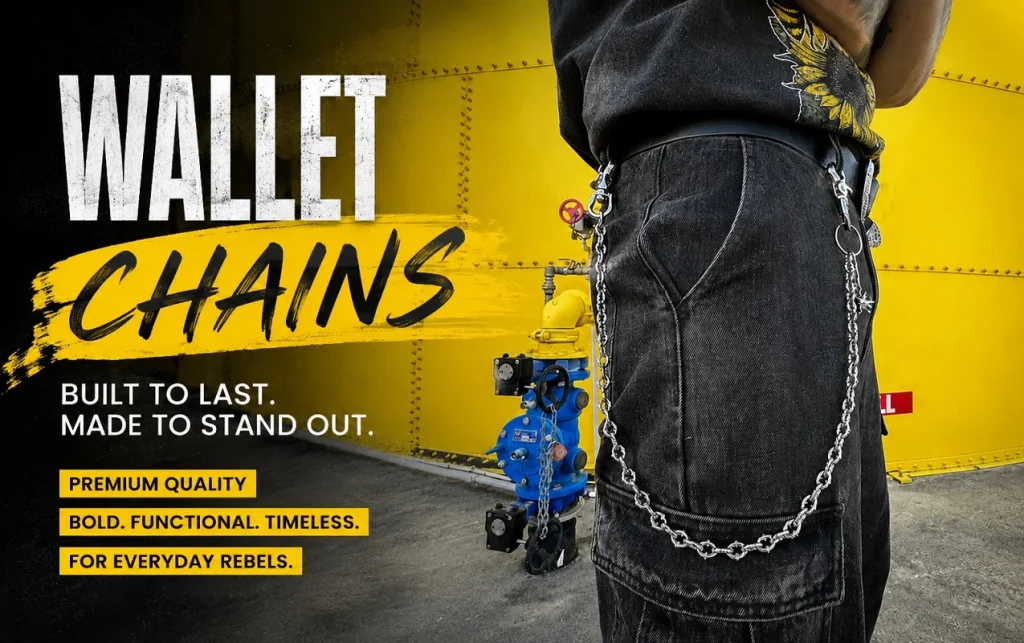
The Timeless Appeal of Wallet Chains
Few accessories in fashion history have managed to walk the fine line between raw utility and undeniable cool quite as effortlessly as wallet chains. Born out of necessity on the open road, these bold pieces of wearable hardware have transcended their biker origins to become a defining symbol of personal expression across decades and subcultures. Whether you wear yours to a concert, a skate park, or a city street, a wallet chain delivers an instant dose of edge that nothing else quite replicates.
The roots of wallet chains stretch back to the 1950s, when motorcycle riders needed a reliable way to keep their wallets from bouncing out of their pockets during high-speed rides. The solution was brilliantly simple: attach one end of a metal chain to the wallet and clip the other to a belt loop. What started as a purely functional fix quickly became a visual identifier for an entire community — a badge worn proudly by those who lived life in the fast lane.
By the 1970s and 1980s, the wallet chain had migrated far beyond the motorcycle world. Punk rockers, heavy metal fans, and counterculture icons adopted it as a symbol of rebellion, individuality, and anti-establishment attitude. It was no longer just about keeping your cash safe — it was about making a statement every time you walked into a room. That dual identity of form and function is precisely what has kept wallet chains relevant for over seven decades.
Materials That Define the Look and Feel
Not all wallet chains are created equal, and the material you choose speaks volumes about your personal style and priorities. Stainless steel is among the most popular choices for good reason — it’s durable, corrosion-resistant, and carries a weighty, industrial aesthetic that pairs naturally with denim, leather, and dark streetwear. Stainless steel chains hold up through daily wear without losing their luster, making them a practical investment for long-term use.
Sterling silver and plated gold options bring a more elevated, jewelry-forward look to the wallet chain game. These materials appeal to fashion-conscious wearers who want the edge of a chain accessory without sacrificing refinement. A silver rolo chain or a gold cable link can complement a smart-casual outfit just as effectively as it does a grunge-inspired one, offering remarkable versatility across different aesthetics and dress codes.
For those who prefer a softer, more artisanal touch, leather wallet chains offer a compelling alternative. Braided or flat leather straps give a warm, handcrafted quality that feels organic and earthy against the body. Some designs blend leather and metal for a hybrid look that’s become increasingly popular in contemporary streetwear. The right material transforms a simple accessory into a carefully considered extension of your personal brand.
How Wallet Chains Work for Security and Everyday Carry
At their core, wallet chains serve one fundamental purpose: keeping your valuables attached to your body. One end of the chain clips to a D-ring or loop on your wallet, while the other fastens to a belt loop through a carabiner-style clasp or lobster claw hook. This simple mechanism creates a physical tether that makes it virtually impossible for a pickpocket to swipe your wallet without you immediately noticing the tug.
This security function is especially valuable in crowded environments — music festivals, public transit, busy markets, or travel hubs where close-contact theft is a real concern. Unlike a conventional slim wallet sitting loosely in a back pocket, a chained wallet resists the sleight-of-hand techniques commonly used by opportunistic thieves. The chain acts as both a deterrent and a physical barrier, giving you peace of mind without sacrificing the convenience of quick-access carry.
Beyond theft prevention, wallet chains reduce the risk of accidental loss during active pursuits. Cyclists, skaters, construction workers, and anyone who moves dynamically throughout the day benefits from knowing their wallet is anchored. Even the simple act of leaning over, crouching, or sitting on a crowded bench becomes risk-free when your wallet is secured by a chain. It’s a low-tech solution that consistently outperforms the anxiety of an unsecured back pocket.
Style Guide: Wearing Wallet Chains the Right Way
One of the most common questions new wallet chain wearers ask is: which side do I wear it on? Traditionally, the chain is worn on the dominant hand side — right for right-handed individuals, left for left-handed — because that’s where you’d naturally reach to access your wallet. However, there are no rigid rules, and many stylists suggest choosing based on visual balance with the rest of your outfit rather than tradition alone.
Length is another critical consideration that shapes how your wallet chain looks in practice. Short chains — ranging from 12 to 15 inches — sit tight against the body and deliver a controlled, cleaner silhouette. Longer chains, stretching from 18 to 24 inches or beyond, drape dramatically and swing with movement, creating a more expressive, high-impact look. The length you choose should align with the energy you want to project: tight and precise, or loose and effortless.
Pairing wallet chains with your existing jewelry stack is the key to making them look intentional rather than random. If you wear silver rings, a silver chain wallet reinforces a cohesive metallic theme. If you favor leather bracelets and wooden beads, a leather wallet chain ties the look together naturally. The goal is harmony — a wallet chain should feel like it belongs to your overall style narrative, not like an afterthought bolted onto an otherwise unrelated outfit.
Wallet Chains Across Subcultures and Fashion Movements
Few accessories can claim as rich and varied a cultural history as wallet chains. In the punk scene of the late 1970s, they became synonymous with anti-establishment defiance — the heavier and more menacing the chain, the more powerfully it conveyed the wearer’s rejection of mainstream norms. Bands, zines, and entire visual languages were built around the imagery of the chain wallet, cementing its status as a cultural artifact rather than just a fashion item.
The 1990s and early 2000s saw wallet chains explode into mainstream consciousness through the skate and alternative scenes. Brands like Dickies, Volcom, and a wave of skate-influenced streetwear labels featured chain wallets prominently in their lookbooks and ad campaigns. Skateboarders needed the security function for obvious reasons — hitting rails and half-pipes doesn’t mix well with loose valuables — but the chain also became a key part of the skater aesthetic that defined a generation.
Today, wallet chains have completed a full cultural loop, appearing on luxury fashion runways alongside high-street streetwear drops. Designers at Givenchy, Versace, and various avant-garde labels have incorporated chain wallet aesthetics into their collections, validating what underground subcultures knew for decades: this accessory has lasting power. The contemporary wallet chain wearer might be a Harajuku-inspired fashion fan, a hip-hop aficionado, or a minimalist who simply appreciates the tactile weight of a well-crafted chain.
Choosing the Right Wallet Chain for Your Lifestyle
Selecting the perfect wallet chain requires balancing three factors: the type of wallet you carry, the environments you frequent, and the aesthetic you want to achieve. If you use a bifold or trifold wallet, look for chains with a D-ring clip that attaches to a dedicated ring or grommet on the wallet. For slim card holders, a lighter rolo or cable chain will suit the minimalist proportions without overwhelming the piece.
Activity level matters enormously when choosing chain weight and clasp strength. Heavy-duty motorcycle riders and outdoor workers should prioritize thick, welded steel chains with locking clasps that won’t accidentally pop open under stress. Casual wearers attending social events or commuting through urban environments can afford lighter, more decorative chains where aesthetic appeal outweighs raw mechanical strength. Matching the chain to the context ensures you’re never over- or under-equipped.
For shoppers browsing curated collections, a dedicated retailer specializing in fashion-forward chains — such as the range featured at Statement Collective — offers the advantage of quality curation and stylistic coherence. Rather than sorting through generic hardware, you’re choosing from pieces that were designed with intentional aesthetics in mind. This is especially valuable for buyers who want their wallet chain to function as genuine jewelry rather than purely utilitarian gear.
Caring for Your Wallet Chain Over Time
Maintaining the appearance and function of your wallet chain doesn’t require elaborate effort, but consistent care extends the life of any piece significantly. For stainless steel and silver chains, a soft microfiber cloth and gentle polishing solution applied monthly keeps surface oxidation and tarnish at bay. Avoid leaving metal chains in humid environments for extended periods, as moisture accelerates discoloration and weakens clasp mechanisms over time.
Leather wallet chains require a different approach — conditioning with a dedicated leather balm every few weeks keeps the material supple and prevents cracking. If your leather chain gets wet, blot excess moisture immediately and allow it to dry naturally away from direct heat sources. Forced drying with a hairdryer or sunlight exposure can shrink and stiffen leather, ruining the flexible drape that makes it attractive in the first place.
The clasps and attachment points on any wallet chain deserve special attention because they bear the most mechanical stress during daily use. Inspect the lobster clasp or carabiner clip periodically for signs of metal fatigue, bending, or weakened spring tension. A failing clasp is the single most common point of failure on any wallet chain, and replacing it before it gives way entirely means you’ll never have to experience the panic of realizing your wallet has come loose mid-day.
Where Wallet Chains Are Headed Next
The resurgence of Y2K fashion has pushed wallet chains back to the center of trend conversations, with Gen Z and millennial shoppers rediscovering the aesthetic in waves across social media platforms. TikTok and Instagram feeds are rich with style creators layering chunky chain wallets over cargo pants, mini skirts, and oversized hoodies — demonstrating that the accessory’s range is wider than ever. What was once dismissed as a niche subculture item is now a mainstream wardrobe staple for the fashion-aware.
Sustainability is increasingly shaping how modern consumers think about accessories like wallet chains. Artisan brands are responding by offering hand-crafted chains made from recycled metals, upcycled leather, and ethically sourced materials. For shoppers who want style with a conscience, these options allow them to participate in the wallet chain trend without contributing to fast fashion’s environmental footprint. The intersection of craftsmanship, sustainability, and design is producing some of the most interesting wallet chain work happening right now.
Looking ahead, wallet chains are likely to evolve further as multifunctional accessories that serve style, security, and even smart-device attachment purposes. We’re already seeing designs that incorporate keychain attachments, mini tool holders, and modular link systems that allow wearers to customize length and configuration on the fly. The wallet chain began as a simple biker’s solution — and it’s becoming something far more dynamic, adaptable, and culturally rich with each passing season.
