

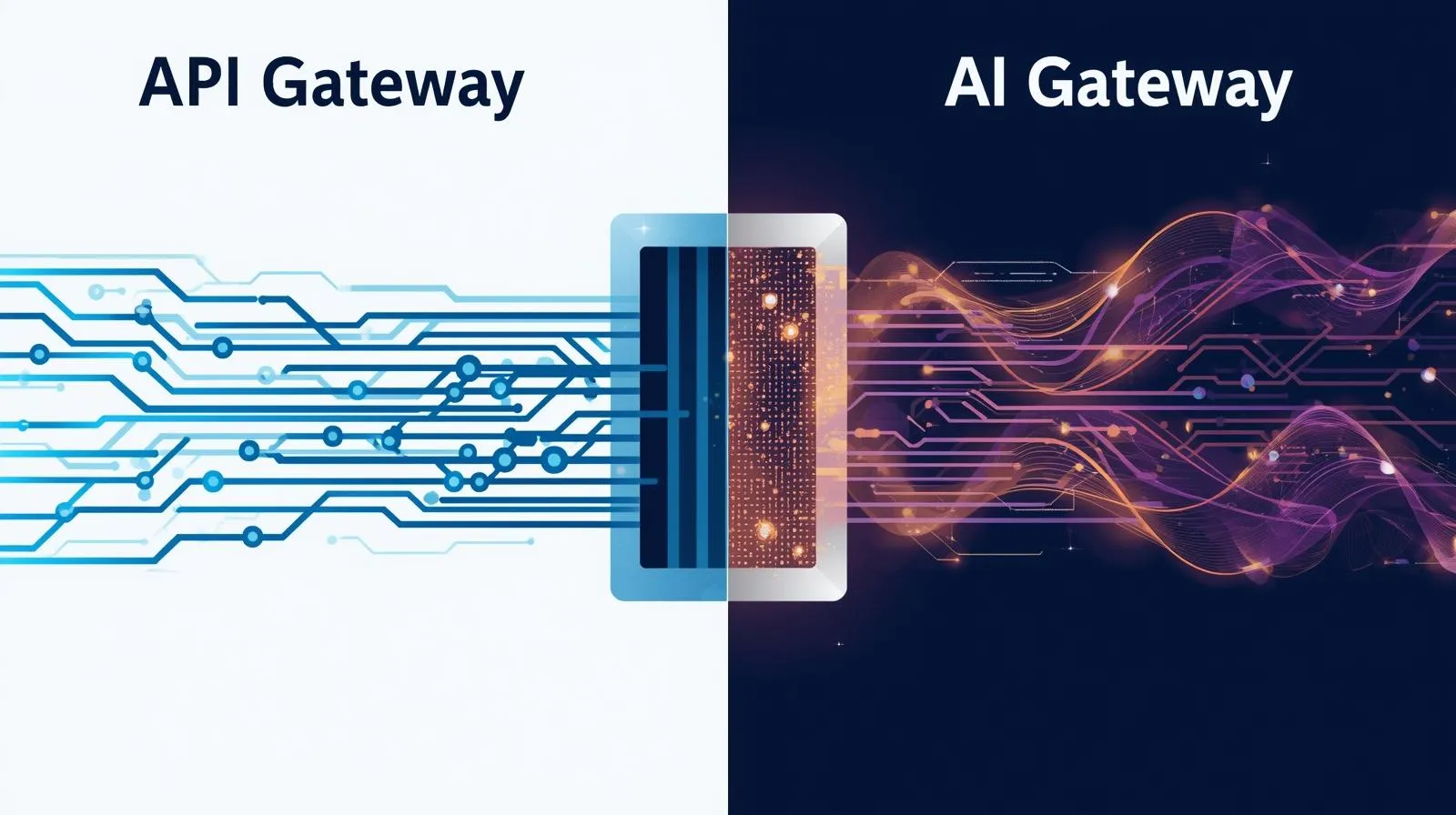
If you’ve ever spent weeks configuring GPU clusters, wrestling with dependency conflicts, or waiting for a model to finish training only to discover it doesn’t perform well in production, you already know the pain of traditional AI implementation. The barrier to deploying intelligent applications has historically been enormous—requiring deep infrastructure knowledge, significant capital, and a team of specialized engineers. But the landscape is shifting rapidly. Today, developers face a fundamental choice: invest in building and maintaining their own AI infrastructure from scratch, or tap into a modern ai inference api that handles the heavy lifting behind a simple endpoint. This comparison isn’t merely academic. It directly impacts how fast you ship features, how much you spend, and whether your team focuses on solving real problems or babysitting servers. Throughout this article, we’ll examine both approaches across the dimensions that matter most—efficiency, cost, scalability, and developer experience—so you can make an informed decision about which path truly wins for your next project.
The Traditional AI Setup: A Deep Dive into Complexity
A traditional AI setup refers to the end-to-end process of building, training, and deploying machine learning models on infrastructure you own or directly manage. This includes on-premises GPU servers, self-hosted cloud instances, and all the surrounding tooling required to move from raw data to a functioning production system. The process typically unfolds across several demanding phases: collecting and cleaning training data, selecting and fine-tuning model architectures, provisioning compute resources, deploying the trained model behind a serving layer, and continuously monitoring performance drift over time.
The challenges compound quickly. Initial capital expenditure for GPU hardware alone can reach six figures, and that’s before factoring in networking, storage, cooling, and redundancy. You need engineers who understand distributed training, containerization, model optimization, and infrastructure security—a combination of skills that’s both rare and expensive. LLM deployment amplifies these difficulties exponentially; large language models demand massive VRAM, sophisticated parallelism strategies, and careful memory management that pushes even experienced teams to their limits. When something breaks at 2 AM, the responsibility falls entirely on your shoulders.
Infrastructure and Setup Challenges
Hardware procurement alone introduces months of lead time—high-end GPUs remain supply-constrained, and building a cluster means coordinating vendors, data center space, and power capacity. Once hardware arrives, the software stack demands attention: CUDA drivers, container orchestration platforms, model serving frameworks like TorchServe or Triton, and dependency management across Python environments that inevitably conflict. Every component must be version-matched, tested, and hardened for production. Environment reproducibility becomes a constant battle, where a minor library update can silently degrade model accuracy or break inference entirely.
Scalability and Maintenance Issues
Traditional setups struggle with variable workloads. You either over-provision hardware (wasting money during quiet periods) or under-provision (creating latency spikes during demand surges). Scaling horizontally requires load balancers, model replicas, and careful state management. Beyond scaling, ongoing maintenance introduces hidden costs that rarely appear in initial budgets: security patches, hardware failures, model retraining cycles, and the engineering hours spent keeping everything running rather than building new features. These compounding obligations mean that what starts as a manageable project often becomes an organizational burden within months.
Modern AI Inference APIs: Revolutionizing Development
The emergence of cloud-native AI services has fundamentally rewritten the rules of deploying intelligent applications. A model inference API eliminates the need to manage infrastructure entirely—instead of provisioning servers and optimizing memory allocation, developers send a request to an endpoint and receive predictions in milliseconds. This abstraction layer means that the months-long journey from concept to production collapses into days or even hours. The economics shift dramatically too: rather than committing six figures upfront for hardware that depreciates immediately, teams pay only for the compute they actually consume. Automatic scaling handles traffic spikes without human intervention, and model updates happen behind the scenes without downtime or redeployment headaches. For organizations seeking a fast AI platform that accelerates every stage of the development lifecycle, these services represent a paradigm shift. Developers can focus entirely on application logic, user experience, and business value rather than debugging CUDA conflicts or monitoring GPU temperatures. The result is an easy-to-use AI development platform that democratizes access to state-of-the-art models regardless of team size or infrastructure expertise.
What is a Model Inference API?
A model inference API is a hosted service that exposes pre-trained or fine-tuned machine learning models through standardized HTTP endpoints. You send input data—text, images, structured prompts—and receive model predictions as structured responses, typically in JSON format. These APIs handle everything beneath the surface: model loading, batching requests for throughput optimization, GPU memory management, and failover across availability zones. Common features include support for multiple model families (from compact classifiers to massive language models), configurable parameters like temperature and token limits, streaming responses for real-time applications, and usage dashboards for monitoring consumption. The critical distinction from traditional deployment is ownership of complexity: the API provider manages versioning, hardware upgrades, and performance tuning, while you retain full control over how predictions integrate into your application.
Benefits of Using a Fast AI Platform
Developer productivity gains are immediate and measurable. Engineers who previously spent weeks configuring serving infrastructure now integrate AI capabilities with a few lines of code and an API key. This shift lets teams iterate rapidly—testing different models, adjusting prompts, and evaluating outputs without redeploying infrastructure for each experiment. Integration simplicity extends beyond initial setup; modern APIs offer SDKs in every major language, webhook support for asynchronous workflows, and compatibility with existing CI/CD pipelines. The compounding benefit is that your team’s cognitive load drops significantly. Instead of maintaining expertise across distributed systems, GPU optimization, and model serving frameworks, developers concentrate on the problems unique to their domain. LLM deployment, which traditionally required weeks of parallelism configuration and memory profiling, becomes a single endpoint call with predictable latency and guaranteed uptime.
Head-to-Head Comparison: Where the Battle is Won
When you strip away the marketing language and examine both approaches through the lens of what actually matters to shipping teams, the differences become stark. Traditional AI infrastructure offers maximum control—you own every layer, customize every parameter, and answer to no external dependency. But control comes at a steep price, and for most organizations, that price exceeds the value it delivers. A modern AI inference API trades some configurability for dramatic gains in velocity, predictability, and resource efficiency. The question isn’t which approach is theoretically superior in isolation; it’s which one wins given your constraints, timeline, and team composition. Let’s break this down across the metrics that determine real-world success.
Cost Analysis: Upfront Investment vs. Operational Expense
Traditional setups demand heavy capital expenditure before a single prediction is served. GPU servers, networking equipment, storage arrays, and redundancy infrastructure easily push initial investment past $100,000 for even modest deployments—and that figure excludes the engineering salaries required to build and maintain the stack. Hidden costs accumulate relentlessly: electricity, cooling, hardware replacements, security audits, and the opportunity cost of engineers maintaining infrastructure instead of building products. Modern inference APIs flip this model entirely to operational expense. You pay per request or per token consumed, meaning costs scale linearly with actual usage rather than projected capacity. There’s no depreciation to manage, no idle hardware burning money overnight, and no surprise repair bills. For teams running variable workloads—which describes most real applications—the AI inference API model eliminates the waste inherent in capacity planning. The total cost of ownership over three years typically favors APIs unless you’re running sustained, predictable workloads at massive scale around the clock.
Time to Market: Speed of Deployment and Iteration
This dimension produces the most lopsided comparison. Traditional LLM deployment involves weeks of infrastructure provisioning, days of optimization tuning, and ongoing cycles of testing before reaching production readiness. Each iteration—trying a different model architecture, adjusting serving parameters, or scaling to new regions—repeats significant portions of that cycle. With a fast AI platform built around inference APIs, the path from idea to production shrinks from months to hours. A developer can evaluate multiple models in an afternoon, swap between them with a configuration change, and deploy globally without touching infrastructure. Rapid prototyping becomes the default workflow rather than a luxury. When market conditions shift or user feedback demands a pivot, API-driven teams respond in days while traditional teams are still updating their deployment pipelines. For competitive environments where shipping speed determines winners, this gap is decisive.
Solving Developer Needs: A Practical Guide to Implementation
Understanding the theoretical advantages of inference APIs is one thing—actually implementing them effectively requires a concrete plan. Whether you’re migrating away from a self-managed stack or building a new AI-powered feature from scratch, the path forward involves deliberate choices about providers, architecture patterns, and operational practices. The good news is that modern platforms have reduced the barrier so dramatically that a single developer can accomplish what previously required a dedicated infrastructure team. The key lies in approaching integration systematically rather than treating it as a simple plug-and-play exercise. A thoughtful implementation strategy ensures you capture the full benefits of an easy-to-use AI development platform while avoiding common pitfalls around cost management, reliability, and security that trip up teams who move too quickly without planning.
Step-by-Step: Choosing and Integrating an AI Development Platform
Start by evaluating providers against your specific requirements rather than defaulting to the most popular option. Compare model availability—does the platform offer the architectures you need, from lightweight classifiers to full LLM deployment capabilities? Examine latency benchmarks, rate limits, geographic endpoint availability, and pricing structures. Platforms like SiliconFlow have emerged to address these needs by offering high-performance inference endpoints with broad model support, making it easier for teams to find a provider that matches their specific workload characteristics. Once you’ve selected a provider, register for API access and spend time with the documentation before writing code. Understand authentication flows, request formatting, response schemas, and error codes thoroughly. Your first integration should be minimal: a single endpoint call with hardcoded inputs that validates connectivity and response quality. From there, build incrementally—add dynamic inputs, implement response parsing, introduce error handling, and connect the output to your application logic. Test across edge cases and load scenarios before promoting to production. Finally, instrument your integration with monitoring from day one so you can track latency percentiles, error rates, and token consumption as you scale usage across your user base.
Best Practices for Efficient AI Integration
Cost management starts with understanding your consumption patterns. Implement caching for repeated or similar queries—many applications send near-identical requests that don’t require fresh model inference each time. Set budget alerts and rate limits at the application layer to prevent runaway costs from unexpected traffic spikes or retry loops. For reliability, build retry logic with exponential backoff, and consider maintaining a fallback provider for critical paths where downtime is unacceptable. Secure your API keys using environment variables or secret management services—never hardcode credentials in application code or commit them to repositories. Implement request validation before sending data to the API to avoid wasting calls on malformed inputs. Plan for model versioning by abstracting your API calls behind an internal interface; when providers update models or you switch between them, your application logic remains unchanged. This separation of concerns keeps your codebase clean and your AI inference API integration resilient against the inevitable evolution of underlying models and services.
Why Modern Inference APIs Win for Most Teams
The comparison between traditional AI infrastructure and modern inference APIs produces a clear verdict for the vast majority of teams: the AI inference API approach wins decisively on cost efficiency, deployment speed, and developer experience. Traditional setups retain relevance only in narrow scenarios—organizations with sustained, predictable workloads at enormous scale, strict data sovereignty requirements, or highly specialized model architectures that no provider supports. For everyone else, the math overwhelmingly favors API-driven development. You eliminate six-figure upfront investments, reduce time to market from months to hours, and free your engineers to solve domain problems instead of infrastructure puzzles. LLM deployment, once a multi-week ordeal requiring distributed systems expertise, becomes an afternoon’s work. The trajectory of the industry reinforces this conclusion—inference platforms continue improving in speed, model diversity, and cost efficiency at a pace no individual organization can match internally. Developers who embrace this shift position themselves to iterate faster, experiment more boldly, and deliver AI-powered features while competitors are still configuring their GPU clusters. The future belongs to teams that build on top of intelligence rather than beneath it.
