

Shreveport drivers know the drill by now: a thunderstorm rolls in off the Ark-La-Tex, dumps two or three inches of rain in under an hour, and suddenly the underpass on I-20 is a lake. It happens most springs, and it’s happened often enough in recent years that the city keeps a running list of flood-prone neighborhoods along the Red River, Cross Lake, and Wallace Lake. If you’ve lived here more than a season, you’ve probably already rerouted around at least one flooded street without thinking twice about it.
What’s less automatic is getting your car itself ready for that kind of weather, and making sure your insurance actually backs you up if it goes wrong. Here’s what that looks like.
Know Where the Water Actually Goes
Flooding in Shreveport isn’t usually about the Red River overflowing its banks, though that happens too during prolonged upstream rain in Texas and Oklahoma. Most of the trouble comes from flash flooding: creeks, bayous, and drainage ditches that fill faster than the storm drains can handle. Underpasses, low-lying stretches near Cross Lake, and older neighborhoods with aging drainage infrastructure tend to flood first and worst.
The fix here isn’t complicated, just easy to forget in the moment. Before storm season ramps up, spend ten minutes looking at which routes to work, school, or the grocery store cross a low point or an underpass. Have a backup route in mind. When the National Weather Service’s Shreveport office issues a flash flood warning, that’s not a suggestion to drive more carefully. It’s a reason to take the other road.
Get the Car Itself Ready
A handful of maintenance checks make a real difference in how your vehicle handles a sudden downpour:
- Tires. Worn tread is the single biggest factor in hydroplaning. If a quarter stuck into your tire groove shows all of Washington’s head, it’s time for new tires before the rain starts, not after you’ve already slid through an intersection.
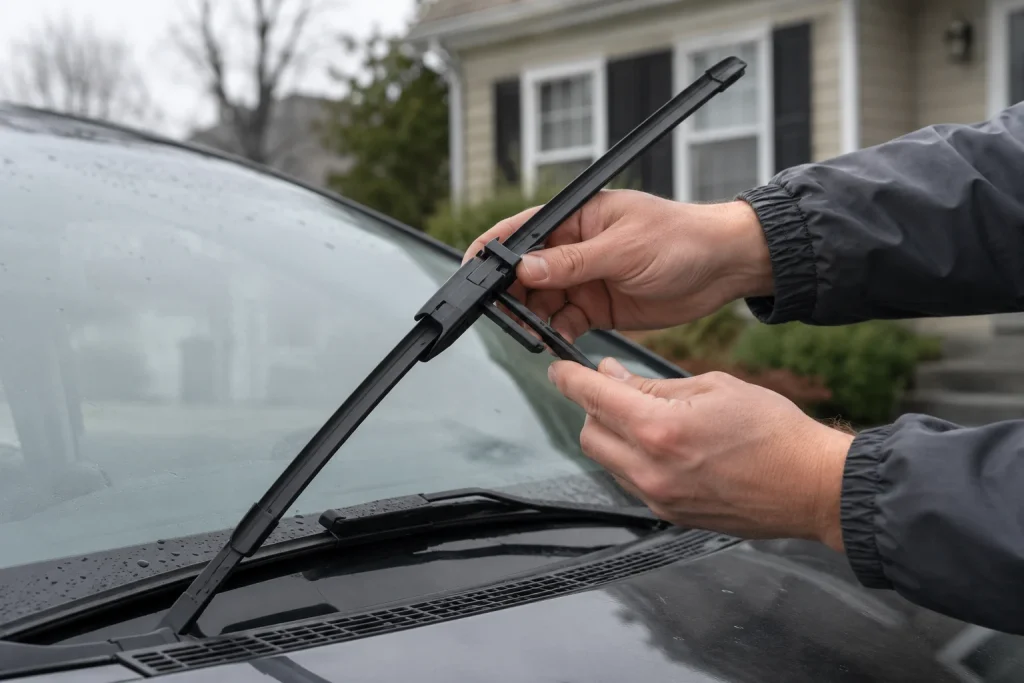
- Wipers. Louisiana humidity breaks down wiper rubber faster than drier climates. If they’re streaking or chattering, replace them. Visibility drops fast in a heavy downpour, and a bad set of wipers makes it worse.
- Brakes. Wet roads roughly double stopping distance. Have your brakes checked if you’ve noticed any grinding, pulling, or a soft pedal.
- Battery and electrical. Standing water and old, corroded battery terminals don’t mix well. A battery on its last legs is more likely to fail after it’s been splashed than before.
- Sunroof and door drains. These clog with leaves and debris more often than people expect, and a clogged drain means water pooling inside your headliner instead of running off the roof.
None of this is expensive to check. A lot of it can be done in an afternoon, and it’s a lot cheaper than a tow truck.
What Your Insurance Actually Covers
This is where a lot of drivers get caught off guard. Liability insurance, which is what Louisiana requires everyone to carry, does not pay to repair or replace your own car after flood damage. Louisiana’s minimum is 15/30/25, meaning $15,000 per injured person, $30,000 per accident, and $25,000 in property damage, but all of that applies to damage you cause to someone else. If floodwater ruins your engine or your interior, that’s a separate coverage entirely: comprehensive.
Comprehensive coverage is optional under state law, but it’s the only part of a policy that responds to flood, hail, falling trees, and similar weather events. If you’re only carrying the state minimum, it’s worth a real conversation with your agent about whether comprehensive makes sense for where you live, particularly if your daily route crosses any of Shreveport’s known flood spots. Rates and available discounts vary by company, and comparing a few quotes for Louisiana auto insurance is a reasonable place to start if you haven’t shopped your policy in a while. Regional carriers, GoAuto Insurance among them, sometimes price flood-prone parishes differently than the big national companies do, which is one more reason it’s worth getting more than one number before you renew.
If your car does take on water, document everything before you touch it: photos of the water line, the interior, the engine bay. Don’t try to start a flooded engine. Water in the cylinders can bend a connecting rod in seconds, turning a bad day into a much more expensive one.
If You’re Caught on the Road When It Floods
Sometimes the storm outruns your plans and you end up on a road that’s flooding in real time. Shreveport police and fire crews run high-water rescues almost every time a fast-moving storm parks over the city for more than an hour, and nearly all of those calls involve someone who thought they could make it through. They usually can’t. The National Weather Service’s long-running Turn Around Don’t Drown guidance puts it plainly: as little as twelve inches of moving water can carry off a sedan, and eighteen to twenty-four inches will float a pickup or SUV. Roadbeds under floodwater also wash out in ways you can’t see from the driver’s seat, so a stretch that looks like six inches of standing water might be hiding a missing chunk of pavement underneath.
If you reach a flooded street, turn around and find another way, even if that means arriving late. Familiarity with a road counts for nothing once it’s underwater; the intersection you’ve driven through a thousand times can wash out in twenty minutes of hard rain. And if your car does stall in rising water, get out and get to higher ground rather than staying with the vehicle. A stalled engine is an inconvenience. Rising water around a car with the doors sealed is not.
After the Water Recedes
Even a brush with floodwater is worth a closer look once the storm passes. Water doesn’t have to reach the dashboard to cause real damage. If it got into the wheel wells or splashed up into the engine bay, check for a musty smell in the cabin, damp carpet, or fogged-up interior lights, all signs that moisture found its way in somewhere it shouldn’t have. Have a mechanic check the air intake and any exposed electrical connectors if you drove through anything deeper than a puddle, since corrosion from floodwater can show up weeks later as a mysterious electrical gremlin instead of an obvious failure.
If the damage is bad enough to file a claim, take photos before you clean anything up, keep the receipts for any emergency repairs or towing, and call your insurer sooner rather than later. Adjusters handling flood claims after a citywide storm event are often working through a backlog, and getting your claim in the queue early tends to move things along faster.
Teaching Newer Drivers to Read the Road
If there’s a teen driver in the house, heavy rain season is a good excuse for a direct conversation about what flooded roads actually do to a car, since it’s not something most new drivers have had to think about yet. Ride along with them through a storm at least once so they can see how the car handles on wet pavement and how quickly visibility changes. It’s also worth walking through your policy together, since coverage for younger drivers works differently and premiums can shift once a teenager is added to the car. Resources built specifically around car insurance for teen drivers can help frame that conversation before it becomes urgent.
The Short Version
Heavy rain isn’t going anywhere in this part of Louisiana, and neither is the occasional flooded underpass. Keep your tires, wipers, and brakes in real shape, know which routes to avoid before the water’s already there, and take a hard look at whether your policy covers flood damage before you need it to. The prep takes an afternoon. Skipping it can cost a lot more than that.
