

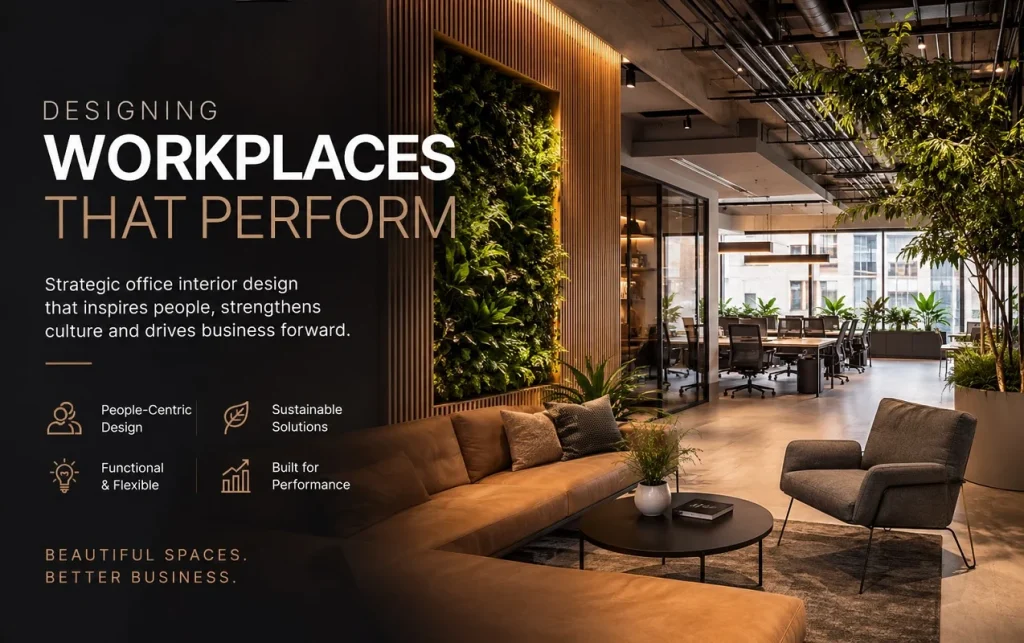
The modern workplace is undergoing one of the most radical transformations in recent memory. Businesses across the globe are rethinking how their physical spaces function, feel, and inspire. In 2026, office interior design has moved far beyond aesthetics — it is now a strategic investment in productivity, employee well-being, and brand identity. Companies that align their workspace with current design thinking are not just creating beautiful offices; they are building environments that attract talent, reduce turnover, and drive measurable performance.
Video conferencing technology has transformed the way businesses, schools, and individuals communicate across long distances.
Why the Traditional Office Layout Is Officially Dead
The era of rigid cubicles, long sterile desk rows, and one-size-fits-all open plans has come to an end. Occupancy data and employee feedback have consistently shown that knowledge workers require a variety of spatial experiences throughout the day — zones for deep focus, spaces for collaboration, areas for informal connection, and quiet corners for recovery.
The 2026 office is no longer a single configuration but a curated portfolio of space types, each serving a distinct purpose. Businesses that still operate on the old blueprint are losing talented employees to organizations that have invested in smarter, more human-centered environments. The question is no longer “open or closed plan?” — it’s “what mix of spaces does this team actually need?”
Biophilic Design Is No Longer Optional
Nature has entered the workplace in a significant and non-negotiable way. Biophilic design — which incorporates living plant systems, natural materials, views to outdoor spaces, and abundant natural light — is now directly correlated with office occupancy rates in post-pandemic studies. Buildings with genuine biophilic features attract and retain people more reliably than those without.
In 2026, moss walls, potted vertical gardens, timber accents, stone textures, and large windows are not decorative extras — they are core components of a high-performing workspace. The business case is clear: employees in biophilic environments report lower stress levels, better concentration, and higher overall job satisfaction. For any company planning a fit-out or renovation, biophilic investment is no longer a luxury; it is a baseline requirement.
Acoustic Comfort Has Become a Structural Priority
One of the most overlooked aspects of office interior design is acoustic performance, and in 2026, that is rapidly changing. The explosion of hybrid work — where some team members are in the office while others dial in remotely — has amplified every acoustic flaw in an open-plan environment. Poor sound management creates an experience for remote participants that are actively worse than staying home, undermining the very purpose of the physical office.
Acoustic treatment, phone booths, enclosed meeting pods, and multi-sized conference rooms are now baseline expectations in well-designed commercial spaces. Designers are integrating sound-absorbing panels, layered ceiling baffles, and soft furnishings not just for comfort but as functional infrastructure. If your office walls are bare and your noise levels are unchecked, you are losing productivity every single hour of the workday.
Flexible Zoning for the Hybrid-First Workforce
Hybrid work schedules are now the norm across most industries, and office layouts in 2026 are being planned around activities rather than job titles or seniority. Activity-based zoning means dedicating specific areas to focus work, collaborative brainstorming, social interaction, and individual recovery — and making those zones easily accessible to everyone regardless of their role.
This shift demands modular furniture systems, moveable walls, lightweight partitions, and multi-functional tech setups that can transform a space within minutes. Companies embracing flexible zoning report higher desk utilization rates and a stronger sense of team community when employees do choose to come in. The goal is to make the physical office so intentionally designed that it offers something remote work simply cannot replicate.
Smart Technology as Invisible Infrastructure
Technology in the 2026 workplace has matured from flashy gadgetry to seamless, invisible infrastructure. Sensor-based lighting systems that adjust to natural daylight levels, air quality monitors integrated into HVAC controls, touchless access panels, and smart booking systems for desks and meeting rooms are all becoming standard features.
The best-designed offices keep technology out of sight while making its benefits impossible to ignore — a room that automatically adjusts its temperature when it detects occupancy, or a lighting system that shifts color temperature to support focus in the morning and creativity in the afternoon.
Video conferencing technology is also being embedded directly into room architecture, with camera arrays, directional microphones, and acoustic screens built into the walls rather than bolted onto a table. When tech blends into the environment, the space feels calmer, cleaner, and more intuitive.
Resimercial Design: Bringing Home Into the Office
One of the most compelling and fast-growing trends reshaping office interior design is the resimercial movement — a deliberate blending of residential warmth with commercial functionality. The idea is simple but powerful: when your office feels a little like home, people are more creative, more relaxed, and more likely to stay longer and collaborate more freely.
This means incorporating soft sofas and lounge chairs alongside traditional workstations, using warm pendant lighting instead of harsh fluorescents, adding area rugs, curtains, open bookshelves, and even kitchen-style break areas with comfortable seating.
Resimercial design does not mean sacrificing professionalism — it means elevating comfort to a strategic tool. Businesses that have adopted this approach consistently report that employees are more willing to come into the office voluntarily, which is the ultimate goal in a world where remote work remains an option.
Sustainability as a Design Philosophy, Not a Feature
Sustainable office design in 2026 has evolved beyond ticking ESG boxes or adding a few recycled-material chairs. It now represents a holistic design philosophy centered on circular thinking — choosing materials with traceable sourcing, designing spaces that can be adapted or disassembled rather than demolished, and reducing waste at every stage of the project lifecycle.
Low-carbon material choices, energy-efficient LED systems that mimic natural daylight cycles, modular furniture designed to last decades rather than years, and responsible supplier selection are all part of how leading businesses approach their fit-outs. Employees — particularly younger generations — are increasingly making career decisions based on a company’s environmental values, and the physical office is one of the most visible expressions of those values. A sustainably designed workspace communicates purpose and responsibility long before any brand statement does.
Personalized Micro-Zones for Individual Focus
Among the most quietly radical shifts in modern office planning is the rise of personalized micro-zones — small, dedicated pockets within the open office that give individuals a temporary sense of ownership and privacy. These are not private offices. They are thoughtfully designed nooks, alcoves, semi-enclosed booths, and focus pods that allow a person to settle in, concentrate, and feel psychologically separated from the noise of the broader floor.
Good office interior design in 2026 ensures these zones are distributed throughout the floor plan, accessible without booking, and equipped with adjustable lighting and basic acoustic separation. The psychological impact is significant: employees who have access to personal focus space report feeling more trusted, more productive, and less fatigued at the end of the day. As neuroscience continues to inform workspace design, the micro-zone concept will only deepen.
Ergonomics Elevated to a Performance Science
Sitting at a desk for eight hours a day is no longer acceptable as a design default. In 2026, ergonomics has been elevated from a human resources concern to a core principle of workspace performance design. Height-adjustable desks, posture-supporting chairs with customizable lumbar settings, monitor arms, footrests, and even under-desk movement options like balance boards are becoming standard across well-invested commercial offices.
Designers are also thinking about movement pathways — the way a floor plan encourages or discourages employees from walking, stretching, and naturally changing their posture throughout the day. Spaces that support physical movement are not just healthier; they are cognitively sharper. A workforce that moves more thinks more clearly, and a floor plan designed to encourage that movement is one of the highest-ROI investments a business can make in 2026.
Color Psychology and Purposeful Aesthetics
The days of all-white walls and grey carpet tiles are firmly behind us. In 2026, color is being wielded as a deliberate performance tool across every type of commercial workspace. Warm amber and terracotta tones energize creative areas; deep blues and muted greens anchor focus zones; neutral earth tones in collaboration spaces reduce tension and encourage open dialogue.
Accent walls, custom murals, branded color schemes, and art installations are being used not just to reflect company culture but to actively shape how people think and feel while working. This is where office interior design meets organizational psychology — and the intersection is proving enormously productive for forward-thinking businesses. When every color decision has a reason behind it, the entire workspace begins to function like a finely tuned instrument.
Right-Sizing: Designing to Real Utilization, Not Headcount
One of the most commercially significant trends of 2026 is right-sizing — analyzing actual peak and average office occupancy rather than total headcount, and designing the space accordingly. Many companies still occupy the same square footage they held before hybrid work became standard, which means they are paying for significant amounts of underutilized floor space.
Smart businesses are working with designers and occupancy data platforms to understand how their space is truly being used, then reconfiguring their layouts into neighborhood zones assigned to specific teams or functions. This approach reduces real estate costs, increases the quality and fit-out standard of the spaces that remain, and gives teams a stronger sense of spatial identity. In an era where every operational cost is being scrutinized, right-sized office design is where smart aesthetics meets smart business strategy.
Caesar is a dedicated workspace and office interior design writer who blends practical expertise with sharp design thinking. He specialises in ergonomic space planning, productivity-focused layouts, and the kind of professional styling that makes a real difference to how people work. From acoustic treatment strategies and smart lighting setups to desk configurations and décor decisions, Caesar’s content gives business owners and interior designers the clear, actionable guidance they need to create office environments that perform as well as they look.
