
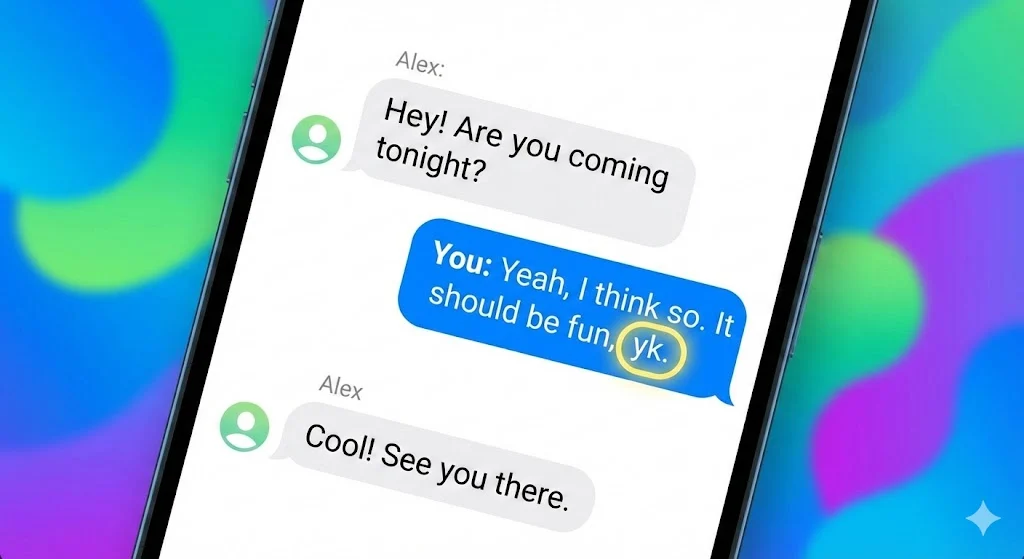

Have you ever received a text that simply said “YK” and made you pause for a second? You are not alone. This small two letter phrase appears everywhere today. From casual texting and social media comments to gaming chats and even professional messages.
Understanding yk meaning is important because it completely depends on context. Sometimes it sounds friendly and relatable. Other times it can feel confusing or even rude if misunderstood. Teenagers, young adults, and online users use it naturally, while professionals may hesitate to use it at all.
In this article, we will explain yk meaning in text, where it comes from, how people use it in different situations, and when you should or should not use it. We will also cover mistakes, regional differences, synonyms, and real examples so you never feel lost again.
Definition & Meaning of YK
YK is a common texting abbreviation that usually stands for “you know.” It is used to make conversations sound natural, casual, and conversational.
In simple words, yk meaning is the same as saying “you know” in spoken English. It helps connect thoughts, soften statements, or assume shared understanding.
Core Meaning
- YK = You know
- Used to keep the conversation flowing
- Makes messages sound informal and relaxed
Simple Examples
- “It was kinda awkward yk”
- “I was tired yk so I left early”
- “That movie was amazing yk”
Why People Use YK
- To sound friendly
- To avoid sounding too serious
- To shorten messages
- To mirror spoken language
Important Point:
YK does not usually add new information. It adds tone and emotion.
Background & History of YK
The use of yk comes from spoken English where people naturally say “you know” while talking. When texting became popular, users started shortening common spoken phrases to save time and effort.
Evolution of YK
- Started in early SMS culture
- Became popular on chat apps and social media
- Widely used by teenagers and young adults
- Now common on platforms like WhatsApp, Instagram, TikTok, Discord, and Snapchat
Cultural Influence
- Influenced by casual American and British speech
- Spread globally through social media and online gaming
- Adopted by non native English speakers copying native conversation style
YK reflects how people actually talk in real life, which is why it feels natural in informal writing.
Usage in Different Contexts
Understanding yk meaning in text depends heavily on where and how it is used.
Casual Texting
This is the most common place for YK.
Examples:
- “I was busy yk”
- “It just felt right yk”
- “He didn’t reply yk”
YK here makes the message softer and more relatable.
Social Media
Used in captions, comments, and replies.
Examples:
- “Just one of those days yk”
- “Feeling proud yk”
It adds emotion and personality to posts.
Gaming & Online Chats
Gamers use YK to explain actions or feelings quickly.
Examples:
- “Lag was bad yk”
- “Didn’t see him coming yk”
Context Table
| Context | Example | Tone |
|---|---|---|
| Texting | “I was tired yk” | Casual |
| Social Media | “That vibe yk” | Relaxed |
| Gaming | “Missed the shot yk” | Informal |
| Professional | Rarely used | Risky |
Professional Communication
In professional settings, yk meaning becomes tricky.
Is YK Professional
Generally, no.
YK sounds informal and conversational, which may reduce clarity and professionalism.
When It Might Be Acceptable
- Internal team chats
- Friendly colleagues
- Informal Slack or Teams messages
Example:
- “The deadline moved yk because of the delay”
When to Avoid It
- Emails to clients
- Reports and documents
- Job applications
- Legal or formal communication
Safer Alternatives
- You know
- As you are aware
- As discussed
- For clarity
Example:
- Instead of “It was delayed yk”
- Write “It was delayed due to scheduling issues”
Hidden or Misunderstood Meanings
YK can sometimes create confusion.
Common Misunderstandings
- Some readers think it asks a question
- Others feel pressured to agree
- Non native speakers may feel confused
Example:
- “It was obvious yk”
This can sound rude if the reader does not actually know.
Tone Matters
YK can sound:
- Friendly
- Casual
- Passive aggressive
- Dismissive
Always consider your audience.
Usage in Emails, Business & Legal Contexts
Emails
YK should generally be avoided.
Wrong:
- “We changed the plan yk”
Correct:
- “We changed the plan as discussed”
Business Communication
Better to use clarity instead of slang.
Legal Context
YK should never be used in legal writing.
Legal writing requires:
- Precision
- Formal tone
- No ambiguity
Synonyms & Related Phrases
If you want to avoid YK, here are alternatives.
Casual Alternatives
- You know
- I mean
- Like
- Honestly
Neutral Alternatives
- As mentioned
- As you know
- In general
Formal Alternatives
- As discussed
- For clarification
- As previously stated
Using the right alternative improves tone control.
Comparison with Similar Terms
| Term | Meaning | Tone | Usage |
|---|---|---|---|
| YK | You know | Casual | Texting |
| IK | I know | Casual | Replies |
| IMO | In my opinion | Semi formal | Online |
| TBH | To be honest | Casual | Social media |
| FYI | For your information | Formal | Work |
YK is softer and more conversational than most abbreviations.
Common Phrases Using YK
- “It happens yk”
- “That feeling yk”
- “You get it yk”
- “Just saying yk”
- “I tried yk”
These phrases reflect spoken conversation patterns.
Mistakes to Avoid
Overusing YK
Using it too often makes writing weak.
Wrong:
- “I was tired yk and busy yk so I left yk”
Using It with Strangers
It can sound too casual or rude.
Using It in Serious Topics
Avoid YK in:
- Apologies
- Complaints
- Legal issues
- Professional feedback
How to Use YK Correctly
Best Practices
- Use sparingly
- Use only in casual contexts
- Avoid with authority figures
- Consider tone
Dialogue Examples
Friend chat:
“It was stressful yk but I managed”
“The task was challenging, but completed successfully”
Regional & Cultural Differences
United States
- Very common in texting
- Sounds natural and friendly
United Kingdom
- Used but less frequently
- Can sound filler like “you know”
Australia & Canada
- Similar to US usage
- Casual and relaxed
Non Native English Regions
- Often copied from social media
- Sometimes misunderstood
- Best to avoid in formal writing
Cultural Tip
In cultures that value direct communication, YK may feel unnecessary or confusing.
FAQs
What does YK mean in text
It usually means “you know.”
Is YK rude
Not usually, but tone matters.
Can YK be a question
Sometimes it feels like one, but it is not grammatically a question.
Is YK okay in professional chats
Only in very informal internal conversations.
Should non native speakers use YK
Only if comfortable with tone and context.
Is YK slang
Yes, it is informal slang.
Conclusion
Understanding yk meaning helps you communicate better in texting, social media, and online chats. YK is a casual expression that mirrors spoken English and adds emotional tone rather than meaning. When used correctly, it makes conversations feel natural and friendly. When misused, it can cause confusion or sound unprofessional.
Always consider context, audience, and purpose before using YK. For casual chats with friends, it works perfectly. For professional or serious communication, clearer alternatives are better. Mastering small phrases like YK improves your overall communication skills and helps you sound confident, natural, and aware in digital conversations.