

If you have ever wondered what herpes looks like, you are not alone. This is one of the most searched health questions online because herpes can appear differently depending on the stage of infection and the person.
Herpes is a common viral infection that affects millions of people worldwide. However, many people do not recognize its symptoms early. That is because herpes can look similar to other skin conditions such as pimples, ingrown hairs, or rashes.
Understanding what herpes looks like helps you identify symptoms early, seek treatment, and prevent spreading it to others. This guide will explain everything in a simple and clear way so you can understand the visual signs, stages, and differences.
Let’s break it down step by step.
Quick Answer
What does herpes look like?
Herpes usually appears as:
- Small red bumps
- Fluid filled blisters
- Painful sores or ulcers
- Crusted or scabbed lesions
These sores often appear in clusters and may be painful, itchy, or burning.
Example:
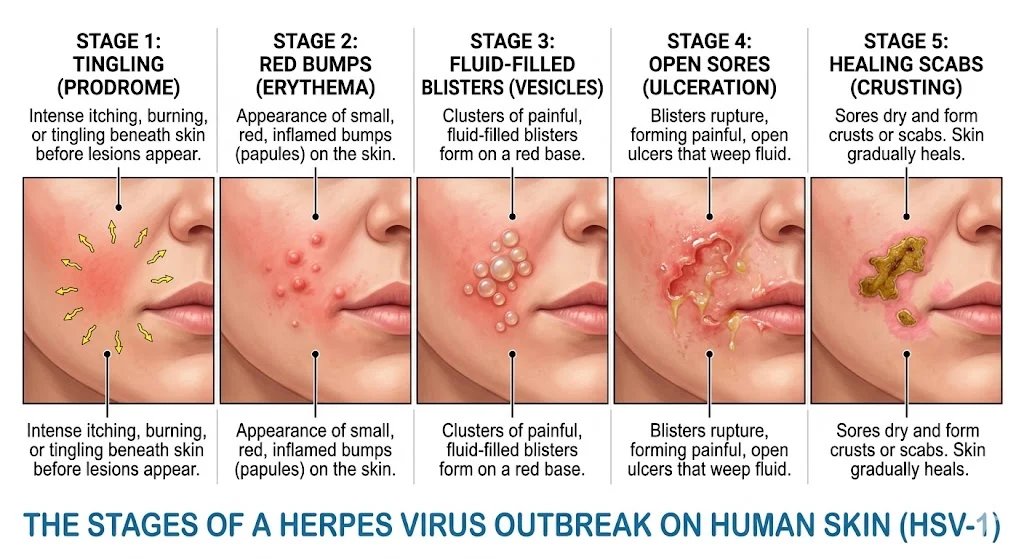
A small red bump appears on the skin → it develops into a blister → the blister bursts → it forms a sore → then it heals with a scab.
Herpes Meaning and Overview
Herpes is a viral infection caused by the herpes simplex virus. There are two main types:
- HSV 1
Usually causes cold sores around the mouth and face - HSV 2
Usually causes genital herpes
Both types can appear in either area depending on transmission.
Key Characteristics:
- Lifelong infection
- Can remain dormant in the body
- Causes recurring outbreaks
- Spreads through direct contact
Understanding what herpes looks like is important because early detection can reduce discomfort and prevent spreading.
What Does Herpes Look Like in the First Stage
The first stage of herpes is often called the prodromal stage. This stage happens before visible sores appear.
Early Symptoms:
- Tingling sensation
- Itching or burning feeling
- Skin sensitivity
- Mild pain in the affected area
At this stage, the skin may look completely normal, which makes herpes difficult to detect early.
Key Insight:
You can feel herpes before you see it.
What Does Herpes Look Like on the Skin
Once symptoms progress, herpes becomes visible on the skin.
Early Visible Signs:
- Small red bumps
- Swollen skin
- Clusters of bumps
- Slight discoloration
These bumps may look similar to:
- Pimples
- Ingrown hairs
- Rash
However, herpes bumps tend to group together in clusters.
Herpes Blisters Appearance
After the initial bumps appear, they turn into fluid filled blisters.
What These Blisters Look Like:
- Small and round
- Filled with clear or yellowish fluid
- Shiny and tight
- Clustered in groups
Important Detail:
These blisters are fragile and can break easily.
Once they break, they leave behind open sores.
What Herpes Looks Like When It Bursts
When herpes blisters break open, they turn into painful sores.
Appearance:
- Open wounds or ulcers
- Red or raw skin
- Sometimes bleeding
- Moist surface
These sores can be very sensitive and painful.
Key Point:
This is often the most uncomfortable stage.
What Herpes Looks Like When Healing
After the sores open, the healing process begins.
Healing Signs:
- Scabbing over
- Dry crust formation
- Reduced redness
- Decreased pain
The skin gradually heals, but sometimes leaves temporary marks.
What Does Herpes Look Like on Lips
Oral herpes usually appears as cold sores around the mouth.
Appearance:
- Small fluid filled blisters
- Crusty sores on lips
- Red and swollen skin
- Painful cracks or splits
Common Locations:
- Lip edges
- Around the mouth
- Under the nose
Cold sores often start with tingling before appearing.
What Does Herpes Look Like on Genitals
Genital herpes appears on or around the genital area.
Appearance:
- Small painful blisters
- Red patches
- Sores or ulcers
- Itchy or burning skin
Common Locations:
- Penis or vulva
- Inner thighs
- Buttocks
- Around the anus
These symptoms can vary depending on the person.
Herpes Rash vs Other Skin Conditions
Herpes is often confused with other conditions.
Comparison Table:
| Condition | Appearance |
|---|---|
| Herpes | Clusters of fluid filled blisters |
| Acne | Single pimples with pus |
| Razor Burn | Irritated red bumps |
| Ingrown Hair | Small red bump with hair inside |
| Rash | Flat red irritated skin |
Key Difference:
Herpes tends to form clusters of painful blisters, while acne and rashes usually do not.
What Does Early Herpes Look Like vs Later Stages
Early Stage:
- Tingling
- Itching
- Redness
Mid Stage:
- Blisters
- Swelling
- Fluid filled bumps
Late Stage:
- Open sores
- Scabs
- Healing skin
Understanding these stages helps identify herpes at different times.
What Does Herpes Look Like in Men
In men, herpes usually appears as:
- Blisters on the penis
- Red sores on the shaft or head
- Pain in the genital area
- Itching or burning
It may also appear on:
- Thighs
- Buttocks
What Does Herpes Look Like in Women
In women, herpes may appear as:
- Blisters on the vulva
- Sores inside or outside the vagina
- Red patches
- Painful urination
It can sometimes be harder to see due to location.
How Long Does Herpes Last
A typical outbreak follows this timeline:
- Tingling stage: 1 to 2 days
- Blister stage: 2 to 4 days
- Ulcer stage: 3 to 5 days
- Healing stage: 5 to 7 days
Most outbreaks heal within 2 to 3 weeks.
What Triggers Herpes Outbreaks
Herpes can stay inactive and then reactivate.
Common Triggers:
- Stress
- Weak immune system
- Illness
- Fatigue
- Hormonal changes
- Sun exposure
Understanding triggers helps manage outbreaks.
Is Herpes Always Visible
No. Herpes is not always visible.
Important Facts:
- Some people have no symptoms
- Virus can be present without sores
- Transmission can happen even without visible signs
This is why many people unknowingly spread it.
What Does Herpes Feel Like
Besides appearance, herpes also causes physical sensations.
Common Feelings:
- Burning sensation
- Tingling
- Itching
- Pain when touched
- Discomfort during urination
When to See a Doctor
You should consult a doctor if:
- You notice unusual sores
- You feel pain or burning
- Blisters appear in clusters
- Symptoms keep recurring
A medical professional can provide diagnosis and treatment.
Treatment Options
While herpes cannot be completely cured, it can be managed.
Treatment Includes:
- Antiviral medications
- Pain relief medication
- Creams and ointments
- Lifestyle management
Treatment helps:
- Reduce symptoms
- Speed up healing
- Lower outbreak frequency
Prevention Tips
You can reduce the risk of herpes:
- Avoid direct contact during outbreaks
- Use protection during intimate contact
- Maintain good hygiene
- Avoid touching sores
- Strengthen immune system
FAQ About What Herpes Looks Like
1. What does herpes look like at the beginning
It starts as tingling, itching, or redness before blisters appear.
2. What does herpes look like on skin
It looks like clusters of small red bumps or blisters.
3. Can herpes look like acne
Yes, early herpes can look similar to acne but forms clusters.
4. What does healing herpes look like
It forms scabs and dry skin before fully healing.
5. Can herpes look different in people
Yes, symptoms vary from person to person.
6. Does herpes always have blisters
Not always. Some people may have mild or no visible symptoms.
Conclusion
Understanding what herpes looks like is important for early detection and proper care.
Herpes typically appears as:
- Small red bumps
- Fluid filled blisters
- Painful open sores
- Scabs during healing
It can appear on the mouth, genitals, or other areas of the body. Recognizing symptoms early helps you take action, seek treatment, and prevent spreading.
If you ever notice unusual skin changes, the safest step is to consult a healthcare professional.
Being informed is the first step toward better health and responsible awareness.