
Have you ever read a message like “SMH, I can’t believe he did that” and wondered what SMH actually means? You are not alone. Teens, young adults, and even professionals encounter SMH meaning in text and slang on social media, texting apps, and online forums.
SMH is more than just an acronym; it’s an expression of emotion, often conveying disbelief, disappointment, or frustration. Understanding it can help you decode casual conversations, social media posts, and even professional communication, avoiding awkward misunderstandings.
In this article, we will explore SMH meaning in text and slang, provide real-life examples, explain common mistakes, and highlight its regional and cultural variations. By the end, you will know when, how, and where to use SMH confidently.
Definition & Meaning of SMH
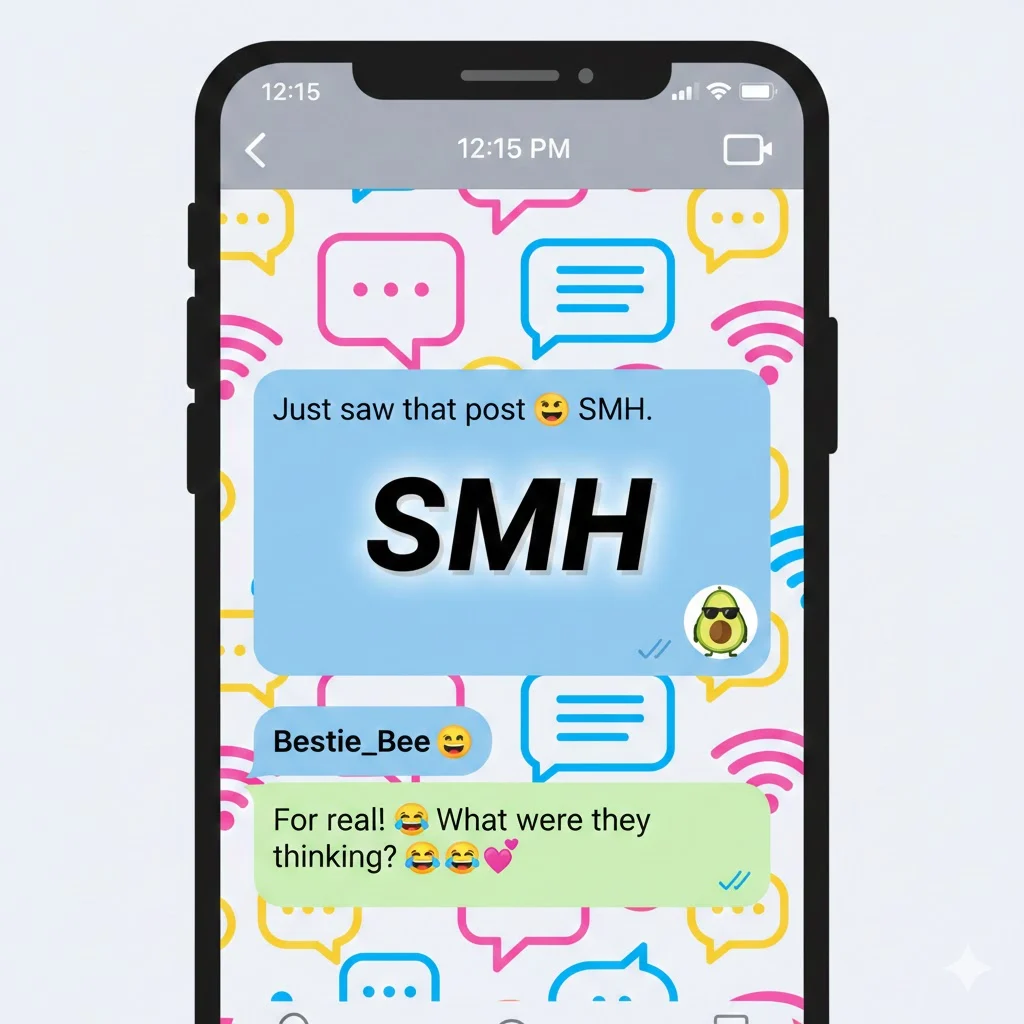
SMH stands for “Shaking My Head.” It’s used online, in text messages, and in chat slang to express disbelief, disappointment, frustration, or embarrassment about something someone said or did.
Key Points:
- Shaking My Head: Indicates disapproval or disbelief.
- Tone matters: Can be humorous, sarcastic, or serious depending on context.
- Popular in texting, social media, and online forums.
Examples in Sentences:
- Casual Chat: “SMH, he forgot our meeting again.”
- Social Media: “SMH at people who leave trash on the beach 😒”
- Gaming Chat: “SMH, I can’t believe I just died to a noob.”
Dialogue Example:
Mia: “He literally spent $500 on a phone case.”
Jake: “SMH, that’s insane.”
Synonyms & Related Phrases
Users often search for alternatives to SMH, or want to understand similar slang. Related phrases include:
- Facepalm
- Shaking my head in disbelief
- SMH emoji combinations 🤦♂️🤦♀️
- Seriously?
- Can’t believe it
- Disappointed
- Frustrated
Example:
“SMH, I can’t believe she didn’t reply to my email.”
“Facepalm, seriously? That’s rude.”
Background & History
SMH emerged in early internet culture in forums, chatrooms, and early texting communities. It became widely recognized through social media platforms like Twitter, Instagram, and TikTok.
Timeline:
- Early 2000s: Used in instant messaging (AOL, MSN Messenger).
- 2010s: Spread across Twitter, Tumblr, and Reddit.
- 2020s: Popular among teens, gamers, and social media users globally.
Cultural Influence:
- Mostly used in English-speaking countries.
- Often appears alongside emojis or GIFs to enhance tone.
- Can indicate humor, sarcasm, or genuine frustration depending on the audience.
Usage in Different Contexts
1. Casual Texting & Social Media
- Used among friends to show disbelief or frustration.
- Example: “SMH, he wore socks with sandals again 😂”
2. Professional Contexts
- Less common, but may appear in informal team chats or internal communication.
- Example: “SMH, another client changed the brief last minute.”
- Use sparingly; overuse can appear unprofessional.
3. Gaming & Online Communities
- Expresses frustration with gameplay or other players.
- Example: “SMH, they captured our base in 10 seconds.”
Example Table:
| Context | Example | Notes |
|---|---|---|
| Casual Chat | “SMH, he forgot my birthday.” | Informal, humorous |
| Social Media | “SMH at people who litter 😒” | Expresses frustration |
| Professional | “SMH, we missed the deadline.” | Informal internal chat |
| Gaming | “SMH, lag ruined the match!” | Common in online games |
Professional Communication
Using SMH in professional contexts should be done cautiously.
Tips:
- Avoid using in client-facing emails or formal reports.
- Appropriate in team chats if the tone is informal and everyone understands the slang.
- Can use alternatives for professionalism: “I’m disappointed,” “This is frustrating,” or “Unbelievable.”
Examples:
- Informal: “SMH, we got last-minute changes from the client.”
- Professional alternative: “I am frustrated with the last-minute changes from the client.”
Hidden or Misunderstood Meanings
While SMH is generally harmless, it can be misinterpreted depending on context.
Common Misunderstandings:
- Confusing SMH with sarcasm or anger.
- Using it with someone unfamiliar who might not know the meaning.
- Assuming tone without accompanying emojis or text.
Examples:
- Ambiguous: “SMH, really?” (Could be funny or frustrated)
- Clear: “SMH 😒, he didn’t follow instructions again.”
Tip: Pair SMH with context or emoji to ensure your intended tone is clear.
Usage in Emails, Business & Legal Documents
- Internal Business Chat: “SMH, another project got delayed.”
- Legal or Formal Writing: Avoid using SMH. Use formal alternatives: “This is concerning,” “The situation is disappointing.”
Example Email Replacement:
Subject: Project Update
Team,
The deadline has been moved again. This is disappointing, but we will adapt.
Regards,
Project Lead
Comparison with Similar Terms
| Term | Meaning | Tone | Usage |
|---|---|---|---|
| SMH | Shaking My Head | Casual / Frustrated | Text, social media, forums |
| Facepalm | Physical / textual gesture of disbelief | Casual / Humorous | Text, social media, GIFs |
| FML | Frustration about personal events | Casual / Strong | Texts, memes |
| SMFH | Stronger form: Shaking My F***ing Head | Casual / Offensive | Informal online use only |
Insight: SMH is widely accepted in online communication, but stronger variants may be offensive.
Common Phrases with SMH
- “SMH at this situation”
- “SMH, can’t believe it”
- “SMH emoji 🤦♂️🤦♀️”
- “SMH over the news”
- “SMH, another Monday”
How to Use SMH Correctly
Tips:
- Use SMH to express mild frustration, disbelief, or embarrassment.
- Combine with emojis for clarity.
- Avoid overusing in professional contexts.
Dialogue Examples:
Friend 1: “He ate the last slice of pizza.”
Friend 2: “SMH, I was saving that!”
Gamer: “They all left the match early.”
Friend: “SMH, seriously?”
Bullet Points:
- Pair with emojis for tone clarity.
- Avoid in formal communication.
- Can be used humorously or seriously depending on context.
Regional & Cultural Differences
- US & UK: Widely used in casual texting and social media.
- Australia & Canada: Similar usage; often paired with humorous GIFs or memes.
- Non-native English speakers: Some may not understand SMH, so avoid in professional or international contexts.
Example:
“SMH, he parked in front of my house.” – US teen text
“I don’t understand SMH, what does it mean?” – Non-native English speaker
Mistakes to Avoid
- Using SMH in formal writing or client emails
- Assuming everyone knows the slang
- Overusing SMH in a single conversation
- Mixing SMH with unrelated acronyms
Tip: When in doubt, use a formal alternative like “unbelievable” or “frustrating.”
FAQs
Q1: What does SMH mean in text?
A: It means “Shaking My Head,” expressing disbelief, disappointment, or frustration.
Q2: What does SMH mean in slang?
A: Same as above; commonly used online in memes, social media, or casual texts.
Q3: Can I use SMH in professional emails?
A: Only in informal team chats, not in formal emails or reports.
Q4: Are there synonyms for SMH?
A: Facepalm, disbelief, shaking my head emoji, frustrated.
Q5: Can SMH be offensive?
A: Usually no, but avoid variants like SMFH in professional or mixed-company chats.
Q6: Is SMH universally understood?
A: Mostly in English-speaking countries. Non-native speakers may not know it.
Q7: How to clarify tone with SMH?
A: Pair with emojis or text to indicate whether it’s humorous, sarcastic, or serious.
Conclusion
Understanding SMH meaning in text and slang helps you communicate emotions like frustration, disbelief, and embarrassment effectively. Using it correctly improves your social media interactions, texting, and informal online conversations.
Always consider context, audience, and tone. Pair SMH with emojis or text for clarity. Avoid overuse in professional or international communication. Mastering SMH lets you stay up-to-date with texting culture while expressing yourself naturally in online spaces.