
Have you ever received a text that simply said SMH and made you stop for a second? You are not alone. This short acronym is everywhere. You see it in text messages, social media comments, memes, gaming chats, and even professional Slack conversations. Yet many people still ask what does SMH really mean and when should it be used.
Understanding SMH meaning is important because tone matters a lot online. One wrong acronym can change the mood of a conversation completely. Sometimes SMH is playful. Sometimes it is sarcastic. Other times it can sound rude or judgmental if used incorrectly.
In this article, we will explain the meaning of SMH in simple language. We will explore where it came from, how people use it today, and how its meaning changes based on context. You will also learn common mistakes, professional usage rules, cultural differences, and safe alternatives. By the end, you will know exactly when to use SMH and when to avoid it.
Definition & Meaning of SMH
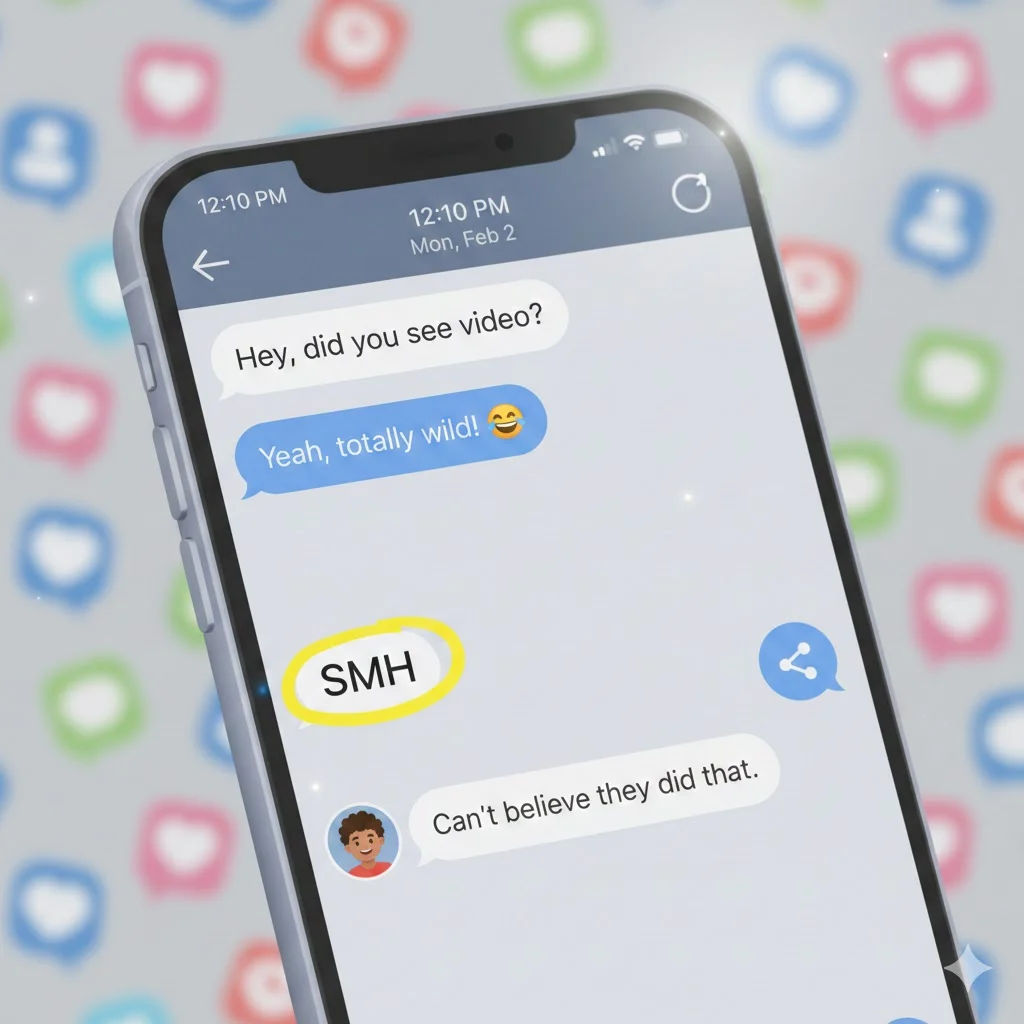
SMH stands for Shaking My Head. It is an internet slang term used to express disappointment, disbelief, frustration, or mild disapproval.
At its core, SMH shows a reaction. It tells the reader that the sender is mentally shaking their head at a situation.
What SMH Really Conveys
SMH can express different emotions depending on context:
- Disappointment
- Disbelief
- Mild annoyance
- Sarcasm
- Humor mixed with frustration
Simple Examples
- “You forgot your keys again. SMH.”
- “He really wore socks with sandals. SMH.”
- “SMH at this internet drama.”
Dialogue Example
Alex: “I stayed up all night gaming before my exam.”
Sam: “SMH. You never learn.”
Important Note
SMH does not always mean anger. Sometimes it is lighthearted or playful. Context and relationship between people decide the tone.
Background & History of SMH
The phrase shaking my head existed long before the internet. People physically shake their heads to show disbelief or disappointment in real life. When online chatting became popular, users turned this physical action into text.
Origin
- Early chat rooms and forums in the late 1990s
- Popularized through instant messaging and SMS
- Became mainstream with Twitter, Facebook, and memes
Evolution
At first, SMH was used seriously. Over time, it evolved into a flexible slang term that can be serious, sarcastic, or humorous.
Cultural Influence
- Meme culture made SMH more expressive
- GIFs and emojis often replace or support SMH
- Younger users use it casually, sometimes ironically
Today, SMH is one of the most recognized internet acronyms worldwide.
Usage in Different Contexts
SMH changes meaning based on where and how it is used.
Casual Conversations
In casual texting, SMH is common and usually harmless.
Examples:
- “You still have not watched that movie. SMH.”
- “SMH, I just spilled coffee on my shirt.”
Tone here is often playful or teasing.
Social Media Usage
On platforms like Instagram, Twitter, and TikTok, SMH is used to react to posts.
Examples:
- “SMH at people arguing over nothing.”
- “This comment section. SMH.”
It often shows collective disappointment or sarcasm.
Gaming & Online Communities
Gamers use SMH to react to bad plays or silly mistakes.
Examples:
- “SMH, why would you rush alone?”
- “We lost because no one followed the plan. SMH.”
Table of Contexts
| Context | Example | Tone |
|---|---|---|
| Texting | “SMH you forgot again” | Teasing |
| Social Media | “SMH at this trend” | Judgmental |
| Gaming | “SMH bad move” | Frustrated |
| Friends | “SMH but I still love you” | Playful |
Professional Communication
SMH is generally not recommended in professional communication.
When It Is Inappropriate
- Emails to clients
- Formal business communication
- Legal or academic writing
- Job applications
Using SMH in these settings can appear rude, immature, or unprofessional.
Limited Acceptable Use
In informal workplace chats like Slack or Teams, SMH may be acceptable among close colleagues if the culture is relaxed.
Example:
- “The printer jammed again. SMH.”
Professional Alternatives
- “That is disappointing.”
- “This is unfortunate.”
- “I am surprised by this.”
Hidden or Misunderstood Meanings
SMH can be misunderstood easily.
Why Misunderstandings Happen
- No facial expression
- Cultural differences
- Tone unclear in text
- Relationship between sender and receiver
Risky Situations
- Using SMH with elders
- Using it in serious discussions
- Using it with strangers
Example
- Risky: “SMH, you messed this up.”
- Safer: “This could have been handled better.”
Always consider how the other person may feel.
Usage in Emails, Business & Legal Contexts
Emails
Avoid SMH completely in formal emails.
Wrong:
“SMH, this delay is unacceptable.”
Correct:
“This delay is disappointing and needs attention.”
Business Communication
Use clear professional language instead of slang.
Legal Context
SMH should never appear in contracts, legal notices, or official documentation.
Legal writing requires clarity, neutrality, and formality.
Synonyms & Related Phrases
Users often search for alternatives to SMH. These phrases express similar emotions.
Informal Synonyms
- Facepalm
- Wow
- Seriously
- Can’t believe this
- Unreal
Emoji Alternatives
- 🤦
- 😒
- 🙄
Formal Alternatives
- Disappointing
- Unfortunate
- Surprising
- Regrettable
Example:
- “SMH at this situation”
- “This situation is disappointing”
Common Phrases Using SMH
- “SMH my head”
- “SMH right now”
- “SMH at people”
- “SMH so hard”
Important Clarification
“SMH my head” is technically redundant because SMH already means shaking my head. However, it is widely used in casual internet language.
Mistakes to Avoid
Common Errors
- Using SMH in serious emotional conversations
- Using it professionally
- Using it to insult someone directly
- Overusing it
Incorrect Usage
- “SMH you are terrible at this.”
Better Option
- “I think this could be improved.”
Quick Tips
- Avoid SMH in sensitive topics
- Avoid SMH with people who may misinterpret tone
- Use emojis if tone needs softening
How to Use SMH Correctly
Best Practices
- Use with people who understand slang
- Pair with context
- Use emojis to soften tone
- Keep it light
Dialogue Examples
Friend: “I forgot your birthday.”
You: “SMH but it’s okay.”
Gamer: “I jumped off the map again.”
Team: “SMH 😂”
Regional & Cultural Differences
United States
SMH is extremely common and widely understood. Used casually across all age groups online.
United Kingdom
Used mostly among younger users. Older generations may find it rude.
Canada & Australia
Similar usage to the US. Mostly casual and humorous.
Asia & Non Native English Regions
SMH is understood among internet users but can confuse non native speakers.
Cultural Sensitivity
In some cultures, expressing disappointment directly is considered rude. SMH may come across as disrespectful.
Comparison with Similar Slang Terms
| Term | Meaning | Tone | Usage |
|---|---|---|---|
| SMH | Shaking my head | Disappointed | Casual |
| LOL | Laughing out loud | Funny | Casual |
| OMG | Oh my God | Shock | Casual |
| WTF | What the heck | Angry | Strong |
| Facepalm | Embarrassment | Mild | Casual |
FAQs
What does SMH mean in text?
SMH means shaking my head. It shows disappointment or disbelief.
Is SMH rude?
It can be if used incorrectly or with the wrong person.
Can I use SMH at work?
Only in very casual internal chats. Avoid in formal settings.
Is SMH still popular?
Yes. It remains widely used across social media.
Is SMH slang or abbreviation?
It is internet slang and an acronym.
Can SMH be funny?
Yes. When used with emojis or jokes, it can be humorous.
Conclusion
Understanding SMH meaning helps you communicate better in the digital world. This simple acronym carries emotional weight and can express disappointment, disbelief, or humor depending on context. While it is common in casual texting, social media, and gaming, it should be avoided in professional and formal communication.
Always consider your audience, relationship, and situation before using SMH. When used correctly, it adds personality to conversations. When misused, it can cause misunderstandings. Mastering this balance will help you communicate clearly, respectfully, and confidently online.