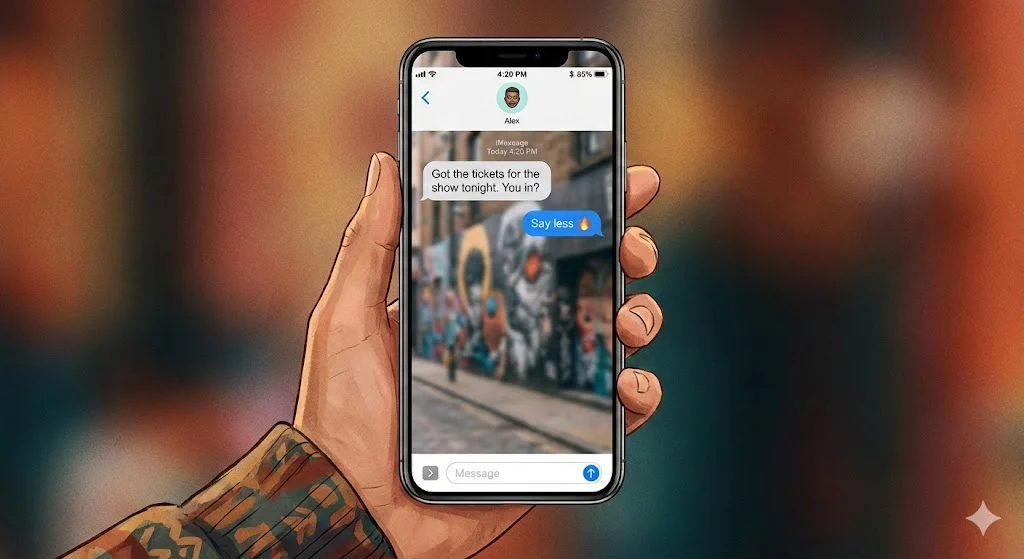

Have you ever sent a long message explaining something, only to get a short reply that says “Say Less”? At first glance, it may feel confusing. Did the person want you to stop talking, or were they agreeing with you? This small phrase has become extremely popular in texting, social media, and everyday conversations, especially among young people.
Understanding say less meaning is important because it is not always literal. In fact, most of the time, it means the opposite of what the words suggest. It is used to show agreement, understanding, or support without needing extra explanation.
In this detailed guide, we will explore what “say less” really means, where it comes from, how it is used in casual and professional settings, common mistakes people make, and how its meaning changes across cultures. By the end, you will clearly understand when to use it and when to avoid it.
Definition & Meaning of Say Less
Say less is a modern slang phrase that usually means “I understand,” “You do not need to explain more,” or “I am already on board.” It does not mean someone wants you to stop talking in a rude way. Instead, it often shows agreement, confidence, or full understanding.
Core Meaning in Simple Words:
- I get it
- You do not need to explain further
- I agree completely
- Consider it done
Important Points:
- It is informal and conversational
- Mostly used in spoken language, texting, and social media
- The tone can change meaning, so context matters a lot
Examples in Sentences:
- “We are meeting at 8 and wearing black.”
Reply: “Say less.” - “This plan saves time and money.”
Reply: “Say less. I am in.”
Dialogue Example:
Alex: “We should leave early to avoid traffic.”
Jordan: “Say less. That makes sense.”
In this case, say less clearly means agreement and understanding, not silence.
Background & History of Say Less
The phrase say less gained popularity through urban slang, hip hop culture, and social media, especially in the United States. While the words themselves are simple English, the phrase took on a new meaning through cultural usage.
Origins:
- Early use in African American Vernacular English
- Popularized by rap music, street culture, and internet memes
- Spread rapidly through Twitter, TikTok, Instagram, and texting
How the Meaning Evolved:
Originally, “say less” literally meant to speak fewer words. Over time, it became a way to say “you already convinced me” or “I do not need more details.”
Today, it is widely understood among younger generations as a sign of agreement, approval, or confidence.
Synonyms & Related Phrases
Understanding similar phrases helps users fully grasp say less meaning and use it correctly.
Casual Synonyms:
- Got it
- I understand
- Sounds good
- I am in
- No need to explain
- Bet
Slang Alternatives:
- Say no more
- Facts
- For sure
- Word
- Done deal
Professional Alternatives:
- Understood
- Acknowledged
- That makes sense
- I agree with this approach
Example:
“Say less” is very similar to “say no more,” but “say less” sounds more modern and confident.
Usage in Different Contexts
The meaning of say less changes depending on where and how it is used.
Casual Conversations
This is where the phrase is most common.
Examples:
- “We are ordering pizza tonight.”
Reply: “Say less.” - “That movie was amazing.”
Reply: “Say less. I am watching it tonight.”
Here, it shows excitement and agreement.
Social Media & Texting
Used in comments, replies, and captions.
Examples:
- “New season drops tonight.”
Comment: “Say less.” - “This song is fire.”
Reply: “Say less.”
Often paired with emojis to show tone.
Gaming Context
Gamers use it to show quick agreement or readiness.
Example:
- “We attack from the left side.”
Reply: “Say less.”
Context Table
| Context | Meaning | Tone |
|---|---|---|
| Texting | I understand | Casual |
| Social media | Approval | Confident |
| Gaming | Ready or agreed | Fast paced |
| Professional | Rare usage | Risky |
Professional Communication
In professional or workplace environments, say less should be used carefully.
When It Is Not Appropriate:
- Formal emails
- Client communication
- Legal documents
- Interviews
Why:
- It can sound too casual
- May appear unprofessional or unclear
Better Alternatives:
- “Understood.”
- “That is clear.”
- “I agree with this plan.”
Example:
Incorrect:
“Say less. I will handle it.”
Correct:
“Understood. I will take care of this.”
Legal Context Usage
In legal settings, say less should almost never be used.
Reasons:
- Slang is not legally precise
- Can be misinterpreted
- Not acceptable in formal documentation
Legal Alternative Phrases:
- “Acknowledged”
- “Agreed upon”
- “Confirmed”
Example:
Instead of “say less,” a lawyer would say:
“The terms are clear and accepted.”
Hidden or Misunderstood Meanings
Many people misunderstand say less because the words suggest silence.
Common Misinterpretations:
- Thinking it means “stop talking”
- Assuming it is rude
- Believing it dismisses the speaker
Reality:
Most of the time, it is positive and supportive.
Tone Matters:
- Friendly tone equals agreement
- Sarcastic tone may sound dismissive
Example:
Friendly:
“Say less. I trust you.”
Sarcastic:
“Yeah, say less.”
Mistakes to Avoid
These mistakes can confuse users or hurt communication.
Common Errors:
- Using it with strangers or elders
- Using it in formal writing
- Using it without understanding tone
- Overusing it in every reply
Wrong Usage:
Boss: “Please review the contract carefully.”
You: “Say less.”
Correct Usage:
“I will review the contract and get back to you.”
How to Use Say Less Correctly
Tips:
- Use it with friends or peers
- Make sure tone is friendly
- Add emojis in text to show intent
- Avoid professional settings
Dialogue Example:
Sam: “Let’s keep it simple and finish early.”
Chris: “Say less.”
Key Rule:
If you would not say it to your boss, do not type it in an email.
Regional & Cultural Differences
The meaning of say less can vary by region.
United States
- Very common among young people
- Strong roots in urban culture
- Clearly means agreement
United Kingdom
- Less common
- May confuse older audiences
- “Say no more” is preferred
Canada & Australia
- Understood by younger users
- Casual and informal
South Asia
- Mostly used online
- Meaning understood through social media
- Can confuse non-native speakers
Example:
In the US, “say less” feels natural.
In Pakistan or India, users may pause to understand it.
Comparison with Similar Phrases
| Phrase | Meaning | Tone |
|---|---|---|
| Say less | I understand | Slang |
| Say no more | Agreement | Casual |
| Got it | Understanding | Neutral |
| Understood | Clear acceptance | Formal |
| Bet | Agreement | Slang |
Common Situations Where Say Less Is Used
- Making plans
- Agreeing quickly
- Showing confidence
- Ending long explanations
Example:
“This plan saves time and money.”
“Say less.”
FAQs
Q1: Does say less mean stop talking?
A: No, it usually means I understand or I agree.
Q2: Is say less rude?
A: Not in casual conversation. Tone matters.
Q3: Can I use say less at work?
A: It is better to avoid it in professional settings.
Q4: Is say less slang?
A: Yes, it is modern slang.
Q5: What is a formal alternative?
A: “Understood” or “I agree.”
Q6: Is say less used worldwide?
A: Mostly in English speaking countries and online spaces.
Conclusion
Understanding say less meaning helps you communicate better in modern conversations. While the phrase may sound like it asks for silence, it actually shows agreement, confidence, and understanding in most cases. It is a powerful slang expression when used in the right context, especially among friends, on social media, or in casual chats.
However, it is important to avoid using it in professional or legal settings where clarity and formality matter. Always consider tone, audience, and situation before using it. When used correctly, “say less” makes communication faster, cooler, and more expressive in today’s digital world.