
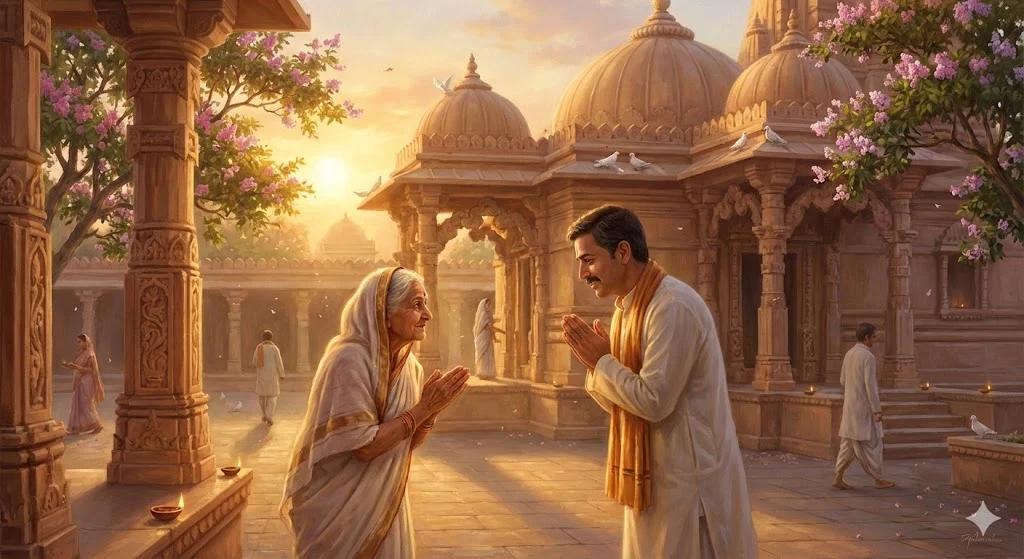

You have probably heard the word Namaste many times. It appears in yoga classes, spiritual talks, travel videos, social media captions, and daily greetings across South Asia. People often say it with folded hands and a gentle smile. But what does Namaste really mean? Is it just another way to say hello, or is there something deeper behind it?
Understanding namaste meaning goes beyond translation. It carries spiritual respect, cultural values, and emotional connection. Many people use it casually without knowing its true significance, while others hesitate to use it because they are unsure if it is appropriate.
In this article, we will explore the true meaning of Namaste, its origins, cultural importance, and correct usage in casual, professional, and even formal settings. You will also learn common mistakes, regional variations, and how to use Namaste respectfully and confidently in real life.
Definition & Meaning of Namaste
Namaste is a traditional greeting that originated in ancient India. It is commonly used in Hindu, Buddhist, and Jain cultures. The word comes from Sanskrit.
Namaste is made of two parts:
So the literal meaning is:
I bow to you
In a deeper sense, namaste meaning is often explained as:
The divine in me bows to the divine in you
Key Meanings of Namaste
- A respectful greeting
- A gesture of humility
- Recognition of inner goodness
- Expression of peace and unity
Simple Explanation
When you say Namaste, you are not just saying hello. You are showing respect, acknowledging the other person’s presence, and expressing goodwill.
Example Sentences
- She greeted the guests with a warm Namaste.
- The yoga instructor ended the session by saying Namaste.
- He joined his hands and said Namaste to the elders.
Dialogue Example
Visitor: “How do people greet elders here?”
Local: “We say Namaste. It shows respect and kindness.”
Background & History of Namaste
The history of Namaste goes back thousands of years. It originated in ancient Sanskrit texts, including the Vedas and Upanishads.
Ancient Roots
- Used in religious rituals
- Mentioned in classical Indian scriptures
- Practiced as a sign of humility and devotion
Evolution Over Time
- Initially used in spiritual and religious contexts
- Later adopted as a common greeting
- Spread globally through yoga, meditation, and cultural exchange
Cultural Influence
Namaste became popular worldwide due to:
- Yoga and mindfulness movements
- Indian cinema and literature
- Spiritual teachers and travel experiences
Today, people across the world use Namaste, sometimes without realizing its deep cultural roots.
Usage in Different Contexts
Namaste is versatile, but context matters.
Casual Usage
In daily life, Namaste is often used as a polite greeting.
Examples:
- Greeting neighbors
- Saying hello in the morning
- Welcoming guests
Example Sentence:
“I smiled and said Namaste to the shopkeeper.”
Professional Usage
Namaste can be used professionally, especially in formal or cultural settings.
Examples:
- Business meetings in South Asia
- Conferences and cultural events
- Formal greetings to elders or clients
Example Sentence:
“The host welcomed the delegates with Namaste.”
Legal or Formal Contexts
Although rare, Namaste may appear in formal or ceremonial events.
Examples:
- Court ceremonies in traditional settings
- Government cultural events
- Diplomatic greetings
Example Sentence:
“The ceremony began with a traditional Namaste.”
Usage Table
| Context | Example | Tone |
|---|---|---|
| Casual | Namaste, how are you? | Friendly |
| Professional | Namaste and welcome everyone | Respectful |
| Formal | Guests were greeted with Namaste | Ceremonial |
Professional Communication
Using Namaste in professional settings depends on cultural awareness.
When It Is Appropriate
- Working in India or South Asia
- Cultural or spiritual organizations
- Yoga and wellness industries
When to Be Careful
- International corporate emails
- Strictly Western business environments
- Legal documents
Professional Example
Correct:
“Namaste and welcome to today’s conference.”
Avoid:
Using Namaste casually in formal legal writing where neutral greetings are expected.
Hidden or Misunderstood Meanings
Many people misunderstand Namaste.
Common Misunderstandings
- Thinking it means only hello
- Treating it as a casual slang word
- Using it sarcastically or jokingly
Correct Understanding
Namaste is rooted in respect and humility. Using it without sincerity can feel disrespectful.
Incorrect Example
Saying Namaste sarcastically in an argument.
Correct Example
Saying Namaste calmly when greeting elders.
Synonyms & Related Phrases
Although Namaste has no exact English equivalent, similar expressions exist.
Related Words and Phrases
- Hello
- Greetings
- Respectful salutations
- Pranam
- Salaam
- Vanakkam
- Sat Sri Akal
Comparison
| Phrase | Culture | Meaning |
|---|---|---|
| Namaste | Indian | I bow to you |
| Salaam | Arabic | Peace be upon you |
| Pranam | Indian | Respectful bow |
| Hello | English | Casual greeting |
Common Phrases Using Namaste
- Namaste and welcome
- Namaste ji (respectful form)
- Namaste everyone
- Namaste and thank you
Example:
“Namaste ji, please have a seat.”
How to Use Namaste Correctly
Proper Gesture
- Join both palms together
- Fingers pointing upward
- Slight bow of the head
Tone Matters
- Calm voice
- Respectful attitude
- Genuine intention
Dialogue Example
Teacher: “We end today’s class with Namaste.”
Students: “Namaste.”
Quick Tips
- Use with sincerity
- Avoid joking tone
- Be culturally respectful
Mistakes to Avoid
- Using Namaste casually as slang
- Using it sarcastically
- Combining it with disrespectful gestures
- Using it incorrectly in legal documents
Wrong Example
“Namaste bro, what’s up?” in mocking tone.
Right Example
“Namaste ji, thank you for coming.”
Regional & Cultural Differences
India
- Widely used across all ages
- Common in both cities and villages
Nepal
- Similar usage and meaning
- Deep spiritual respect
Western Countries
- Mostly used in yoga and meditation
- Often misunderstood as casual greeting
Global Perspective
Namaste is respected worldwide but meanings can vary depending on awareness.
Examples in Casual, Professional & Formal Contexts
Casual
“She waved and said Namaste.”
Professional
“The manager greeted the team with Namaste.”
Formal
“The ceremony concluded with Namaste.”
FAQs
Q1: Is Namaste religious?
It has spiritual roots but is widely used culturally.
Q2: Can non Indians say Namaste?
Yes, if used respectfully.
Q3: Is Namaste formal or casual?
It can be both, depending on context.
Q4: Is Namaste used in emails?
Rarely, but acceptable in cultural or spiritual settings.
Q5: Is Namaste the same as hello?
Not exactly. It carries deeper respect.
Q6: Can Namaste be used professionally?
Yes, especially in South Asian contexts.
Conclusion
Understanding namaste meaning helps you appreciate its cultural, spiritual, and emotional value. It is more than a greeting. It is a gesture of respect, humility, and connection. Whether used casually, professionally, or ceremonially, Namaste reflects kindness and recognition of others. By using it correctly and sincerely, you show cultural awareness and respect. Always consider context and intention when saying Namaste. When used properly, it becomes a powerful and meaningful way to greet and connect with people across cultures.