
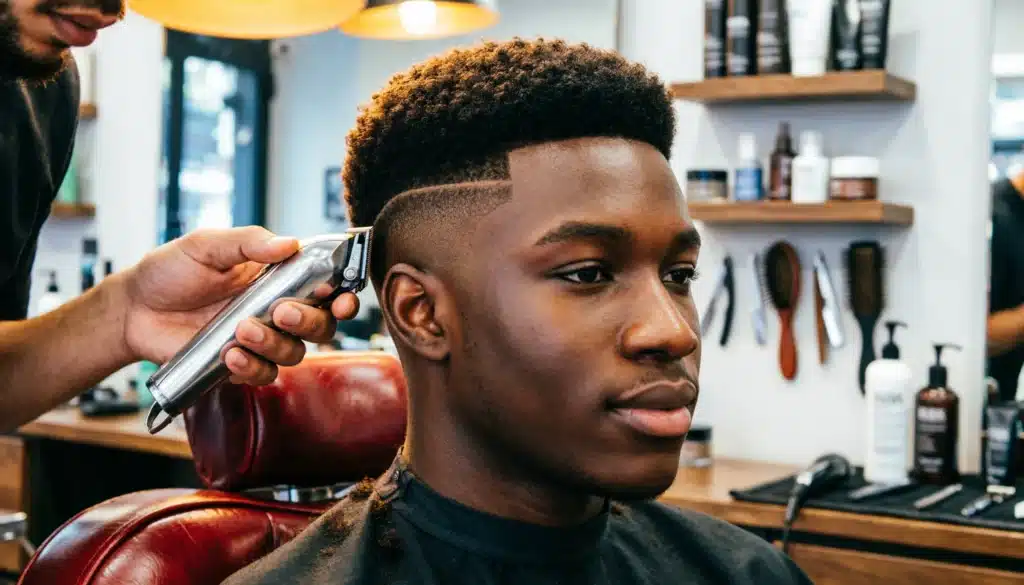

Walk into any barbershop today and you’ll hear it. “Give me a low taper fade.” It’s the most requested men’s haircut on the planet right now — and for good reason. Clean. Versatile. Sharp without being loud. The low taper fade works on virtually every man, every hair type, and every lifestyle.
But here’s the thing. Most guides online give you surface-level fluff. This one doesn’t. Whether you’re trying to figure out what the cut actually is, how to ask for it, which variation suits your face, or why the whole internet lost its mind over a Ninja meme — you’ll find all of it right here.
Let’s get into it.
What Exactly Is a Low Taper Fade?
Before anything else, let’s kill the confusion. The terms taper, fade, and taper fade get thrown around like they mean the same thing. They don’t.
- A taper is a gradual reduction in hair length from top to bottom. It doesn’t go all the way down to the skin — it just gets shorter near the neckline and sideburns.
- A fade is more aggressive. It blends hair down to the skin or near-skin level, creating a stark contrast between the top and sides.
- A taper fade combines both. You get the gradual blending of a taper with the clean, close finish of a fade.
So what makes it low? Everything comes down to where the fade starts.
A low taper fade begins just above the ear and the natural hairline — sitting noticeably lower on the head than mid or high fades. The result is a subtle, clean look that keeps most of your hair intact while still giving you that polished, barbered finish.
The key zones of a low taper fade:
| Zone | What Happens |
|---|---|
| Neckline | Tapered and cleaned up, blended into the skin |
| Sideburns | Gradually reduced, fading into the skin or near-skin |
| Temple area | Slight taper, maintaining natural shape |
| Sides (above ear) | Where the fade truly begins — the defining feature |
| Top | Left longer, styled separately |
Clipper guard sizes typically range from a #0 or #0.5 at the very bottom, blending up through a #1, #1.5, #2, and sometimes a #3 or #4 where the fade transitions into the longer hair on top.
Low Taper Fade vs. Mid Taper vs. High Taper — Which One’s Right for You?
This comparison gets searched thousands of times a month. And honestly, choosing the wrong one for your face or lifestyle makes a real difference.
| Feature | Low Taper Fade | Mid Taper Fade | High Taper Fade |
|---|---|---|---|
| Starting Point | Just above the ear | Around the temples | At or above the temples |
| Visual Impact | Subtle, refined | Balanced | Bold, dramatic |
| Best Setting | Office, formal events | Everyday versatility | Statement or casual |
| Maintenance | Every 3–4 weeks | Every 2–3 weeks | Every 1–2 weeks |
| Best Face Shapes | Most face shapes | Oval, oblong | Square, diamond |
| Contrast Level | Low to moderate | Moderate | High |
The low taper fade wins for most men because it sits in the sweet spot — clean and modern without screaming for attention. It’s the haircut equivalent of a well-fitted suit. Understated. Effective.
Low Taper Fade vs. Skin Fade
A skin fade (also called a bald fade) goes all the way down to bare skin — zero hair at the bottom. A low taper fade may go skin-close at the neckline but the fade itself starts lower, keeping more natural hair on the sides. Skin fades are sharper and more high-maintenance. The low taper is cleaner for longer between visits.
Low Taper Fade vs. Low Fade
These are close but not identical. A low fade simply reduces hair length at the sides, staying low on the head. A low taper fade adds the gradual length transition from the sideburns and neckline, giving more dimension and a more tailored finish.
The Low Taper Fade Meme — How a Haircut Broke the Internet
Here’s where it gets fun.
In 2023, the low taper fade exploded beyond barbershops and onto the internet in a way nobody predicted. The viral “low taper fade” meme took over TikTok, YouTube, and Twitter simultaneously — turning a haircut into a full-blown cultural moment.
The meme format was simple but brilliant. It typically involved someone dramatically asking for a low taper fade and the barber delivering something wildly unexpected. Or it involved imagining unlikely people — fictional characters, athletes, video game icons — getting low taper fades with absurd, hilarious results.
The Ninja Low Taper Fade Moment
The “imagine if Ninja got a low taper fade” trend became arguably the biggest single moment of the meme’s lifecycle. Ninja — the massively popular streamer known for his wild blue hair — became the unlikely face of barbershop culture for a few glorious weeks. Thousands of edits, AI-generated images, and video memes flooded every platform showing Ninja post-fade transformation. Some were genuinely funny. Some were disturbingly convincing.
The low taper fade ninja searches spiked to extraordinary levels during this period. Even people who’d never thought about haircuts were suddenly Googling what a low taper fade actually was.
The Low Taper Fade Song
Yes, there’s a song. The low taper fade song emerged from the meme culture as a short-form audio clip that went viral on TikTok, used as background audio in countless fade-related videos. It reinforced the haircut’s status as a genuine cultural phenomenon — not just a trend but a moment in internet history.
“What’s wild is that a meme literally drove millions of men into barbershops asking for a specific cut they’d just seen go viral online.”
The lesson? Culture and grooming have always been connected. The low taper fade meme just made that connection impossible to ignore.
Low Taper Fade for Every Hair Type
This is where most guides fail you. They show a bunch of photos and call it a day. Let’s actually talk about how the low taper fade works differently depending on your hair texture — because it genuinely does.
Low Taper Fade for Curly Hair
Curly hair and the low taper fade were practically made for each other. The natural volume and texture on top creates a stunning contrast against the tight, clean fade on the sides. It looks dynamic without any extra effort.
The blowout low taper fade curly hair style has become particularly popular — where the curls on top are blown out slightly for extra volume and a rounded, almost retro shape. Think 1970s soul combined with modern barbershop precision.
Tips for curly hair:
- Ask your barber to cut curls dry — wet curly hair shrinks significantly when it dries, leading to an unexpectedly short result
- Use a curl cream or defining gel daily to keep the top looking intentional
- A satin pillowcase reduces frizz overnight and keeps your shape intact
- Deep condition weekly to keep curl definition sharp
Popular top styles with curly hair: curly fringe, natural afro shape, curly quiff, defined ringlets with product.
Low Taper Fade for Straight Hair
Straight hair shows the fade’s precision most clearly. Every blending line, every gradient — it’s all visible. That’s both an advantage and a demand for quality. A mediocre barber will show on straight hair before any other type.
The low taper fade with textured fringe is one of the most searched straight-hair variations — and for good reason. A choppy, piece-y fringe sitting over a clean fade looks effortlessly modern. It’s the haircut you see on every fashion-forward young professional right now.
Best top styles for straight hair:
- Textured crop with fringe
- Side part (classic or modern)
- Slick back with pomade
- Quiff with medium hold clay
- Messy French crop
Low Taper Fade for Wavy Hair
Wavy hair sits in the best of both worlds. It’s got enough texture to look intentional without products but enough flexibility to be styled in multiple directions. A low taper fade with wavy hair on top naturally gives a relaxed, coastal feel.
Use a sea salt spray or light mousse to enhance the wave definition. Avoid heavy pomades — they’ll weigh the wave down and flatten everything you’re trying to show off.
Low Taper Fade for Thick Hair
Thick hair creates serious visual impact with a low taper fade. The contrast between the dense, full top and the precisely faded sides is dramatic in the best way. However, thick hair requires a skilled barber — one who knows how to point-cut and texturize the top to remove bulk without removing length.
Ask specifically for point cutting or razor cutting on the top if you have thick hair. It removes weight while keeping natural movement.
Low Taper Fade for Short Hair
The low taper fade short hair style is a minimalist approach that’s perfect for low-maintenance men. Keep the top under 2 inches and the fade does most of the visual work. It’s clean, effortless, and takes minutes to style in the morning.
This is different from a buzz cut because the top still has defined length and style potential. Think of it as a buzz cut with intention.
Low Taper Fade for Long Hair and Fluffy Hair
This is the trend that’s turning heads in 2024–2025. Long, voluminous tops paired with a low taper fade create a striking juxtaposition. The low taper fade fluffy hair style — where the top is kept long, voluminous, and slightly wispy — has exploded in popularity.
And then there’s the low taper fade mullet. Before you laugh — look it up. The modern mullet paired with a low taper fade is genuinely stylish. Short-to-medium on top, longer in the back, clean on the sides. It’s bold. It works.
Low Taper Fade by Hair Texture and Background
Hair texture varies enormously across different backgrounds. Generic advice doesn’t cut it. Here’s what actually applies to your hair.
Low Taper Fade for Black Men
The low taper fade is deeply embedded in Black barbershop culture. It’s not a trend here — it’s a tradition. The low taper fade black male look is the most searched variation of the cut globally, and that makes complete sense.
Black hair’s natural coil and curl pattern creates extraordinary visual contrast with a low taper fade. The possibilities on top are also broader than any other hair type.
Top styles for Black men with a low taper fade:
| Style | Description |
|---|---|
| 360 Waves | Defined wave pattern that wraps the head, incredibly sharp with a low taper |
| Afro taper | Natural afro shape on top, faded sides — a timeless look |
| Twist out | Two-strand twists on top, defined and textured |
| High-top | Flat-top shape with faded sides — a modern classic |
| Dreads/locs | Short or medium locs on top with a clean fade underneath |
| Textured sponge | Coiled, sponge-applied texture on top |
The lineup — also called an edge-up — plays a massive role in completing this look. A sharp, defined hairline along the forehead, temples, and behind the ears takes the low taper fade from good to perfect.
Low taper fade with waves: Getting your waves defined with a low taper fade requires consistent brushing, a durag or wave cap while sleeping, and wave butter or pomade. The fade frames the wave pattern beautifully when the lineup is crisp.
Low Taper Fade for White Men
Finer, straighter hair textures show fade blending lines with exceptional clarity. The low taper fade complements European hair textures well — especially when paired with volume-oriented top styles.
Popular top styles: pompadour, quiff, textured crop, side part, slick back, crew cut with texture. The skin fade variation is particularly common among white men who want maximum contrast.
Low Taper Fade for Asian Men
Asian hair is typically coarse, thick, and naturally straight — and it holds fade lines with almost architectural precision. The edges are crisp, the gradient is clean, and the contrast is dramatic.
The challenge with Asian hair is the natural direction of growth. Some Asian men have hair that grows downward or forward aggressively. A skilled barber factors growth direction into the cut to avoid awkward weight lines.
Popular top pairings: two-block cut (a Korean-inspired style that pairs naturally with the low taper concept), textured fringe, and undercut variations.
Low Taper Fade for Hispanic Men
The fade has deep roots in Latino barbershop culture — particularly in cities like Los Angeles, Miami, New York, and Chicago. The low taper fade Hispanic men look often incorporates sharp lineups, design work, and beard fades.
Hispanic hair texture varies widely — from wavy to curly to straight — so the top style options are genuinely broad. Geometric designs cut into the fade, part lines, and razor-sharp hairlines are common artistic touches in Latino barbershop culture.
Low Taper Fade Style Variations — The Full Catalog
Here’s where you pick your version of the cut. These aren’t just names on a list — each one is a genuinely distinct look.
Low Taper Fade with Beard
When your beard connects to your fade, the whole look becomes one cohesive style. The key is blending. Your barber should fade the beard into the skin near the cheekbones and fade the hairline fade down to meet it — creating a seamless, uninterrupted gradient from your hair to your chin.
A full beard paired with a low taper fade looks rugged and refined simultaneously. A short stubble fade with the same cut reads as more polished and corporate.
Low Taper Fade with Design
Cut-in designs elevate the low taper fade into wearable art. Popular designs include geometric lines, zigzags, part lines, lightning bolts, and custom patterns. These are carved with a detail trimmer and require serious skill.
Design work typically costs extra ($10–$30 more depending on complexity) and needs a touch-up every 1–2 weeks to stay sharp.
Low Taper Fade with Lineup
The lineup (edge-up) defines the hairline with geometric precision. It straightens the natural curved hairline into clean, sharp angles. Combined with a low taper fade, it’s the difference between “nice haircut” and “that man just stepped out of a magazine.”
Low Taper Fade with Fringe
A fringe (or bangs) hanging forward over the forehead paired with a low taper fade is a very European-influenced style that’s become hugely popular globally. The low taper fade fringe look works in textured, straight, or wavy hair.
Variations:
- Textured fringe — choppy, piece-y, modern
- Curtain fringe — parted in the middle, longer at the sides
- Blunt fringe — straight across, bolder statement
Low Taper Fade Mullet
The modern mullet is genuinely having a moment. Paired with a low taper fade, the back length is typically kept between 3–6 inches, the top stays medium-length, and the sides are faded clean. It’s rebellious but structured. Confident without being chaotic.
Low Taper Fade with Pompadour
Volume on top, clean on the sides. The pompadour paired with a low taper fade is a power look — dramatic, masculine, and undeniably stylish. Use a strong-hold pomade and a blow dryer to build the height.
Low Taper Fade for Every Face Shape
Your face shape determines how you maximize the low taper fade. Here’s the honest breakdown.
| Face Shape | Does It Work? | Best Top Style to Pair |
|---|---|---|
| Round | Yes — elongates the face | Volume on top (quiff, pompadour) |
| Oval | Perfect — the most flexible | Virtually anything |
| Square | Yes — softens angular jaw | Textured or messy top |
| Oblong/Long | Works with care | Keep top length moderate, avoid extra height |
| Diamond | Yes | Balanced width, clean sides |
| Heart | Yes | Moderate volume, avoid very high tops |
Best Low Taper Fade for Round Faces
If you’ve got a round face, the low taper fade is genuinely one of your best options. The key is directing volume upward — not outward. A quiff, pompadour, or textured crop with height on top creates an illusion of a longer, more oval face shape.
Avoid: very short tops with no height — this emphasizes the roundness rather than countering it.
Low Taper Fade Haircut for Boys and Teens
The low taper fade works beautifully on younger men and boys. It’s clean enough for school, flexible enough for personal expression, and low-maintenance enough for busy parents and active kids.
School-appropriate variations:
- Short top with low taper — simple, clean, zero daily styling required
- Textured top with low taper — adds personality without being extreme
- Crew cut with low taper — timeless and universally accepted
For teens who want more expression:
- Low taper fade with fringe and color
- Low taper fade with a design at the temple
- Low taper fade mullet (yes, teens are absolutely pulling this off)
For parents bringing younger kids: Bring a photo. Kids often can’t describe what they want verbally, but a reference image eliminates all guesswork. Most barbers working with younger clients appreciate the clarity.
Is the Low Taper Fade Professional?
Short answer: absolutely yes.
The low taper fade professional look works in almost every workplace context. It’s one of the most office-appropriate fade variations precisely because it’s subtle. The fade sits low, the sides don’t scream for attention, and the top can be styled conservatively or left natural depending on the day.
Best professional pairings:
- Side part on top with a low taper — classic, executive energy
- Crew cut with low taper — no-nonsense, clean
- Short textured top with low taper — modern professional without being trendy
Industries where bolder low taper variations also work:
- Creative industries (advertising, design, media)
- Tech and startups
- Fitness and sports
- Entertainment and hospitality
Where you need to be more conservative (law, finance, traditional corporate environments) — simply keep the top styled neatly and avoid design work or extreme contrasts.
How to Ask Your Barber for a Low Taper Fade
This might be the most practically useful section in this entire guide. Knowing what you want and being able to communicate it clearly are two very different things.
The exact script:
“I’d like a low taper fade — starting just above the ear, fading down to a [zero/half/one] at the neckline. Keep the [length] on top and [add a lineup/leave the hairline natural].”
Fill in the brackets based on your preferences. That’s all you need.
Questions to answer before you sit down:
- How low do you want the fade to start? (Just above the ear is standard for low)
- How short at the bottom? (Skin, #0, #0.5, or #1)
- What do you want on top? (Length, texture, style)
- Do you want a lineup or edge-up?
- What are you doing with your beard?
Bring reference photos. This isn’t weakness — it’s smart. A photo eliminates 90% of the miscommunication that happens in barbershops. Find two or three images that show what you want: one of the fade level, one of the top style, and one of the overall look if possible.
Red flags your barber doesn’t understand the brief:
- They start the fade too high without checking with you first
- They don’t ask about your top length before cutting
- They skip the blending and jump straight to trimming the neckline
- The fade has a harsh, unblended line between guard sizes
How to Cut a Low Taper Fade — Step by Step
Whether you’re a barber student, a curious client, or someone who cuts their own hair — here’s how it’s done properly.
Tools you need:
| Tool | Purpose |
|---|---|
| Hair clippers | Main cutting tool |
| Guards #0, #0.5, #1, #1.5, #2, #3 | Establish the gradient |
| T-outliner / detail trimmer | Neckline, hairline, edge-up |
| Barber comb | Guiding the top length |
| Spray bottle | Keeping hair manageable |
| Cape and towel | Standard setup |
| Blending scissors | Optional, for soft transitions |
The step-by-step process:
Step one — Section and establish the guide line Identify where the fade will start. For a low taper fade, this is just above the ear. Use a comb to mark the visual boundary between the longer top and the faded sides.
Step two — Start with the longer guard Use a #3 or #4 on the lower sides and back. Work from the bottom up, stopping at your guide line. This establishes the base length.
Step three — Work progressively shorter Switch to a #2, then a #1.5, then a #1 — each time starting lower than the previous pass. Each guard creates a band of shorter hair that’ll blend into the next.
Step four — Blend the transitions This is the critical skill. Use the clippers at an angle — a rocking or scooping motion — between each guard size to eliminate the harsh lines. Go over each transition zone multiple times until it’s seamless.
Step five — Zero out the bottom Use a #0 or bare clipper at the neckline and very bottom of the sideburns. Blend it into the #0.5 and #1 above it.
Step six — Detail the neckline and hairline Switch to the trimmer. Define the neckline shape (square, rounded, or natural/tapered). Clean up the sideburns. If a lineup is requested, define the hairline with precision.
Step seven — Address the top Cut the top to the desired length using scissors or a longer guard. Point-cut for texture. Razor-cut for softness. Scissor-over-comb for blended transitions into the fade.
Step eight — Final check and styling Check the blend from every angle. Apply product. Style the top as desired.
Common beginner mistakes:
- Jumping too many guard sizes at once (creates harsh lines)
- Not blending enough between guard sizes
- Starting the fade too high accidentally
- Rushing the neckline detail work
- Cutting the top before finalizing the fade
Low Taper Fade Maintenance — Keeping It Fresh
A fresh low taper fade on day one looks incredible. By week four? It’s a different story. Here’s how to stay sharp between visits.
How often should you go back to the barber?
| Style Complexity | Recommended Visit Frequency |
|---|---|
| Simple low taper, short top | Every 3–4 weeks |
| Low taper with beard | Every 2–3 weeks |
| Low taper with design | Every 1–2 weeks |
| Low taper with lineup | Every 2 weeks |
Daily styling routine:
For straight and wavy hair — a pea-sized amount of medium-hold clay or matte pomade worked through the top gives texture and control without stiffness.
For curly hair — curl cream applied to damp hair, scrunched in and air-dried or diffused. Refresh with a water spray and a small amount of additional cream on dry days.
For 360 waves — wave butter applied and brushed daily, with a durag worn overnight to maintain the pattern.
Keeping the neckline clean at home: Invest in a basic detail trimmer (the Wahl Detailer or Andis T-Outliner are both under $50 and genuinely good). Carefully trim along your natural neckline every 1–2 weeks between barber visits. Stay conservative — a straight neckline is safer than attempting complex curves at home.
Signs it’s time for a touch-up:
- The fade line has grown out and become visibly blended into the sides
- The neckline looks shaggy or undefined
- The top has grown past your desired length
- The lineup (if you have one) is no longer sharp
Low Taper Fade Before and After — What to Expect
If you’ve never had a fade before, the transformation can be genuinely surprising.
What changes most:
The shape of your head appears more defined. The top looks fuller and more intentional. The overall silhouette becomes sharper and more structured — even with the exact same length on top. It’s remarkable how much the sides and neckline affect the complete picture.
The timeline of a low taper fade:
| Timeline | What It Looks Like |
|---|---|
| Day 1–3 | Crisp, sharp, fresh — the ideal state |
| Week 1–2 | Still sharp but slightly softened — still looks great |
| Week 3 | Noticeably grown out — fade line less defined |
| Week 4+ | Time for a visit — the fade has blended back into the sides |
How long does the cut take?
A standard low taper fade with a basic top takes 30–45 minutes with an experienced barber. Add a beard fade, a lineup with design, or significant top work and you’re looking at 60–75 minutes. A first-time visit with a new barber might take slightly longer as they assess your hair type and growth patterns.
Average cost in the US:
- Standard low taper fade: $25–$50
- With lineup/edge-up: $35–$60
- With beard fade: $40–$70
- With design work: $50–$90+
Prices vary significantly by city, barber experience, and shop reputation. In major cities like New York, LA, or Chicago, expect the higher end of these ranges.
Frequently Asked Questions About the Low Taper Fade
What is a low taper fade?
A low taper fade is a men’s haircut where the hair gradually reduces in length from just above the ear down to the neckline, blending into the skin or near-skin level. It’s one of the most versatile and universally flattering haircuts for men of all ages, hair types, and backgrounds.
How is a low taper fade different from a mid taper fade?
The difference is where the fade starts. A low taper fade begins just above the ear, maintaining more hair on the sides. A mid taper fade starts around the temple area, higher on the head, creating more visible contrast between top and sides.
Is a low taper fade good for curly hair?
It’s excellent for curly hair. The natural volume and curl definition on top creates a stunning contrast against the clean, close sides. The blowout low taper fade curly hair style — where the curls are blown out for extra volume — is one of the most popular variations right now.
How much does a low taper fade cost?
In the United States, a standard low taper fade costs between $25 and $50 at most barbershops. Add-ons like a lineup, beard fade, or design work push the price to $60–$90+ depending on complexity and location.
How long does a low taper fade last?
Most men need a touch-up every 2–4 weeks depending on how fast their hair grows and how precise they want to keep the fade. Simpler styles can go 3–4 weeks. Design work and lineups need refreshing every 1–2 weeks.
Can you get a low taper fade with long hair on top?
Absolutely. The low taper fade long hair combination is trending heavily right now. As long as the fade starts low and blends properly, the top can be as long as you want — including the modern mullet variation.
What’s the difference between a low taper fade and a low fade?
A low fade reduces hair length at the sides, keeping the fade position low on the head. A low taper fade adds the gradual reduction from the neckline and sideburns, giving more dimensionality and a more tailored, structured finish.
Is a low taper fade good for round faces?
Yes — it’s actually one of the best options for round faces. The key is pairing it with volume on top (a quiff, textured crop, or pompadour) to elongate the face and create a more oval appearance.
How do I ask for a low taper fade at the barber?
Say: “I want a low taper fade starting just above the ear, fading down to a [zero/half] at the neckline, with [your desired top style].” Bring a reference photo to make communication even clearer.
What is the low taper fade meme?
The low taper fade meme is a viral internet phenomenon that exploded in 2023, involving humorous scenarios centered around the haircut — particularly imagining unlikely people (like streamer Ninja) getting the cut. It drove enormous cultural awareness around the style and sent millions of men to barbershops asking for the specific cut by name.
What is the low taper fade song?
The low taper fade song is a short-form audio clip that went viral on TikTok alongside the low taper fade meme wave. It became widely used as background audio in fade-related videos and meme content throughout 2023.
Can women get a low taper fade?
Yes. While the low taper fade is primarily marketed toward men, women — particularly those with shorter or natural hairstyles — increasingly request the cut. It works beautifully on women with natural afros, TWA (teeny weeny afros), and short textured styles.
Conclusion
The low taper fade isn’t just a haircut. It’s a statement of self-awareness the understanding that clean, well-executed simplicity hits harder than anything complicated. It works in the boardroom and the barbecue. It flatters round faces and square ones. Looks exceptional on curly, straight, wavy, coarse, and fine hair.
From the viral meme that made the internet collectively ask for a low taper fade to the timeless tradition it represents in barbershops across cultures and communities this cut has earned its place as the definitive men’s haircut of this era.
The next step is simple. Find a skilled barber, bring a reference photo, use the script from this guide, and sit down with confidence. The result will speak for itself.