
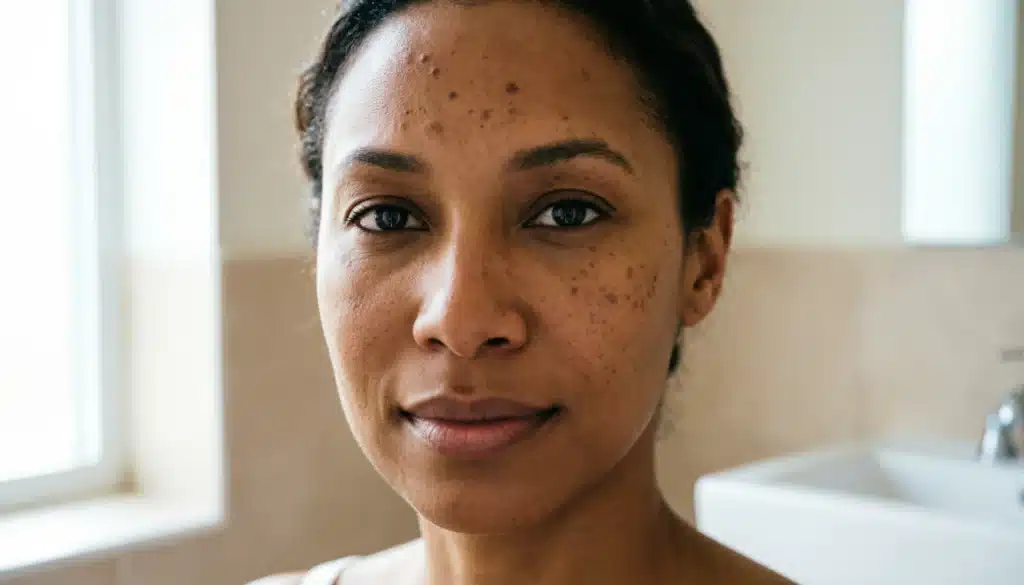

Dark spots. Uneven skin tone. That stubborn patch around your mouth that won’t budge no matter what you try. If any of that sounds familiar, you’re not alone hyperpigmentation affects an estimated 1 in 3 adults worldwide, making it one of the most common skin concerns dermatologists see every single day.
Here’s the frustrating part: most people spend years cycling through creams, serums, and home remedies without ever understanding why their skin keeps producing excess pigment in the first place. And without that understanding, you’re essentially throwing darts in the dark.
The good news? Science has come a long way. In 2026, dermatologists have better tools, better ingredients, and better protocols than ever before. This guide breaks it all down from the biology of what’s actually happening inside your skin, to the treatments that genuinely move the needle, to building a routine that works for your specific type of hyperpigmentation.
Let’s get into it.
What Is Hyperpigmentation? Understanding the Basics
At its core, hyperpigmentation is a condition where certain areas of the skin produce more melanin than surrounding tissue — creating patches, spots, or broad areas of discoloration that appear darker than your natural skin tone.
Melanin is the pigment responsible for your skin’s color. Your body produces it through specialized cells called melanocytes, which live in the basal layer of your epidermis. Under normal circumstances, melanocytes produce melanin in response to UV exposure, inflammation, or hormonal signals — then distribute it evenly across skin cells. That’s how tanning works.
But when something disrupts that process — a hormonal surge, chronic sun exposure, an inflammatory response from a breakout — melanocytes can go into overdrive. They produce far more melanin than the skin can distribute evenly. The result? Dark patches, brown spots, and the uneven complexion that drives millions of people to the skincare aisle.
The key enzyme driving this process is called tyrosinase. It’s the catalyst that converts the amino acid tyrosine into melanin. Nearly every effective hyperpigmentation treatment — from vitamin C to kojic acid to hydroquinone — works by inhibiting tyrosinase activity in some way.
Two layers of skin matter here:
- Epidermal pigmentation sits closer to the surface. It looks brown or tan and responds well to topical treatments and chemical peels. This is the more treatable kind.
- Dermal pigmentation sits deeper in the skin. It appears grayish or bluish-brown and is significantly harder to reach with topicals alone. Laser treatments are typically needed here.
This distinction matters enormously when choosing treatment. A brightening serum won’t touch dermal pigmentation. Knowing which type you’re dealing with saves you months of wasted effort.
Types of Hyperpigmentation — Not All Dark Spots Are the Same
One of the biggest mistakes people make is treating all dark spots the same way. They’re not. The type of hyperpigmentation you have determines which treatments will work — and which ones will waste your time or make things worse.
Post-Inflammatory Hyperpigmentation (PIH)
Post-inflammatory hyperpigmentation develops after the skin experiences some form of trauma or inflammation. Acne is the most common culprit, but eczema, psoriasis, insect bites, cuts, burns, and even aggressive skincare can all leave behind dark marks once they heal.
Here’s what’s happening: when your skin becomes inflamed, melanocytes in the surrounding area get stimulated. They produce excess melanin as part of the healing response. Once the inflammation clears, that extra pigment stays behind — sometimes for months.
People with medium to deep skin tones (Fitzpatrick types IV–VI) experience PIH far more frequently and intensely than lighter-skinned individuals. Their melanocytes are more reactive to inflammatory signals, which is why darker skin tones are disproportionately affected by post-acne marks and scarring.
PIH typically appears as flat, discolored patches — tan, brown, or even dark purple depending on skin depth. Left untreated, mild PIH can fade on its own within 3–6 months. Deeper PIH can linger for years.
Melasma
Melasma is a different beast entirely. It appears as large, symmetrical patches of brown or grayish-brown pigmentation — most commonly across the cheeks, forehead, upper lip, and bridge of the nose. Unlike PIH, it doesn’t follow trauma. Melasma is driven primarily by hormonal fluctuations and UV exposure.
Estrogen and progesterone stimulate melanocyte activity. That’s why melasma spikes during pregnancy — so much so that pregnancy-related melasma has its own name: chloasma, sometimes called the “mask of pregnancy.” Hormonal contraceptives and hormone replacement therapy are also common triggers.
Melasma is notoriously stubborn. It can improve with treatment only to return the moment you skip sunscreen for a few days. It’s also frequently misdiagnosed. Many people treat it like regular sun damage and wonder why nothing works.
Melasma vs. hyperpigmentation — key differences:
| Feature | Melasma | General Hyperpigmentation |
|---|---|---|
| Pattern | Symmetrical, large patches | Irregular spots or patches |
| Primary Trigger | Hormonal + UV | UV, inflammation, aging |
| Most Affected Areas | Cheeks, forehead, upper lip | Anywhere on the body |
| Recurrence | Highly recurrent | Varies by type |
| Treatment Difficulty | High | Moderate to high |
Sun-Induced Hyperpigmentation
Sunspots, age spots, liver spots — these terms all describe solar lentigines: flat, well-defined brown spots that develop after years of cumulative UV exposure. They’re most common on the face, chest, hands, and shoulders — basically wherever the sun hits most.
Here’s something most people don’t realize: the spots you develop at 45 often reflect sun damage you accumulated in your 20s and 30s. UV radiation doesn’t just cause immediate tanning. It creates long-term DNA damage in melanocytes that manifests as visible pigmentation years — sometimes decades — later.
Freckles are slightly different. They’re genetically influenced and tend to darken with sun exposure then fade in winter. Solar lentigines don’t fade seasonally — they’re permanent without treatment.
Drug-Induced and Disease-Related Pigmentation
Some medications cause skin darkening as a side effect. Common culprits include:
- Antimalarial drugs (hydroxychloroquine)
- Certain antibiotics (tetracyclines, doxycycline)
- Amiodarone (heart medication)
- Some chemotherapy agents
- Minocycline (often prescribed for acne, ironically)
Certain medical conditions also cause hyperpigmentation. Addison’s disease — a disorder of the adrenal glands — causes generalized skin darkening, particularly in skin folds, scars, and pressure points. Hemochromatosis (iron overload) produces a bronzed, grayish discoloration. Acanthosis nigricans causes dark, velvety patches in body folds and is often associated with insulin resistance.
If your hyperpigmentation appeared suddenly, spread rapidly, or came alongside other symptoms, see a dermatologist. It warrants medical evaluation.
What Causes Hyperpigmentation? Every Major Trigger
Understanding your trigger is step one. Without it, you might successfully treat existing spots only to develop new ones from the same cause.
Sun exposure is the single biggest cause globally. Ultraviolet rays — both UVA (which penetrates deep and causes aging) and UVB (which burns the surface) — directly stimulate melanin production as a defense mechanism. Even brief, unprotected sun exposure can worsen existing hyperpigmentation or kickstart new spots.
Hormonal fluctuations rank a close second. Estrogen, progesterone, and cortisol all influence melanocyte behavior. Pregnancy, birth control pills, perimenopause, and chronic stress all shift hormonal levels in ways that can trigger or worsen pigmentation — especially melasma.
Inflammation from acne is the most common cause of PIH in teens and young adults. Every pimple that becomes inflamed risks leaving a dark mark. Cystic acne causes the most significant post-inflammatory marks because it triggers deeper inflammation.
Aging contributes in two ways: melanocytes become less regulated with age, and cumulative UV damage builds up over decades of sun exposure. Age spots are essentially the skin’s receipt for years of unprotected outdoor time.
Skin injuries — cuts, burns, friction, aggressive cosmetic procedures — can all trigger PIH. Even certain skincare products, when they cause irritation or allergic reactions, can leave pigmentation behind.
Genetic predisposition plays a real role. If your parents had significant sun spots or melasma, your melanocytes are likely more reactive. Ethnicity matters too — people of African, Asian, Hispanic, and Middle Eastern descent have naturally more active melanocytes, making them more prone to all forms of hyperpigmentation.
Hyperpigmentation on the Face — The Most Common Concern
The face is where most people first notice hyperpigmentation — and where it causes the most frustration. Different zones of the face develop dark spots for different reasons, and treating them effectively means understanding what’s driving pigmentation in each specific area.
Hyperpigmentation Around the Mouth
Perioral hyperpigmentation — dark skin around and above the mouth — is one of the most common complaints dermatologists hear. It’s also one of the trickiest to treat.
Common causes include:
- Hormonal triggers — particularly melasma, which frequently targets the upper lip
- Shaving irritation in men — repeated friction and micro-trauma stimulate PIH
- Toothpaste sensitivity — certain whitening agents and flavorings irritate the skin around lips
- Post-acne PIH from breakouts along the jawline and chin
- Sun exposure — the upper lip receives significant direct sun
The skin around the mouth is also thinner and more sensitive than other facial zones, which makes aggressive treatments riskier. Azelaic acid and tranexamic acid tend to work well here because they’re effective without being overly irritating.
Pigmentation on the Cheeks
The cheeks are melasma’s favorite territory — and for good reason. The malar region (the upper cheek and cheekbone area) receives significant UV exposure and responds strongly to hormonal signals. Many women with melasma describe a butterfly-shaped pattern of pigmentation across both cheeks and the nose.
Sun protection is especially critical for cheek pigmentation. Even indirect light (through windows, reflected off surfaces) can maintain or worsen melasma on the cheeks.
Forehead and Temple Pigmentation
Forehead hyperpigmentation almost always has a hormonal component, particularly in women. The frontal and temporal areas are classic melasma zones. But there’s an underappreciated trigger worth mentioning: hairline products.
Certain hair dyes, chemical relaxers, and oil-based styling products can migrate onto the forehead skin and trigger inflammatory or contact pigmentation. If you have unexplained forehead darkening, consider what’s in your haircare routine — not just your skincare.
Hyperpigmentation from Acne
The acne-to-dark-spot pipeline is painfully familiar to anyone who’s dealt with breakouts. Here’s the sequence: acne triggers inflammation → inflammation stimulates melanocytes → melanocytes produce excess melanin → the pimple heals but leaves a dark mark.
Picking and popping accelerates this dramatically. Physical manipulation of a pimple deepens inflammation, damages surrounding tissue, and almost guarantees a dark mark. As satisfying as it feels in the moment, it’s one of the worst things you can do for post-acne pigmentation.
The good news: PIH from acne is entirely manageable. Treating active acne aggressively, avoiding picking, wearing daily SPF, and using targeted brightening ingredients can significantly reduce the severity and duration of post-acne marks.
The 2026 Hyperpigmentation Treatment Landscape — What Actually Works
This is the section that matters most. There’s a lot of noise in the skincare world — overhyped products, misleading before-and-afters, and ingredients that sound impressive but barely move the needle. Here’s what the evidence actually supports in 2026.
Topical Treatments for Hyperpigmentation
Hydroquinone
Hydroquinone remains the most clinically studied and widely recommended topical treatment for hyperpigmentation. It works by directly inhibiting tyrosinase, reducing melanin synthesis at the source.
Over-the-counter formulas are typically 2%. Prescription-strength hydroquinone reaches 4% and higher. Most dermatologists recommend using it for 8–12 weeks at a time, followed by a break, to minimize the risk of side effects like ochronosis (a rare blue-black discoloration from prolonged overuse).
It’s effective. It works. But it requires sun protection to do its job — without SPF, you’re undoing the treatment in real time.
Tranexamic Acid
If hydroquinone is the gold standard, tranexamic acid is the rising star of 2026. Originally used as a medication to reduce bleeding, tranexamic acid was discovered to be remarkably effective at reducing melanin production — particularly for melasma.
It works differently from most brightening agents: rather than inhibiting tyrosinase directly, it blocks the interaction between keratinocytes and melanocytes that triggers excess melanin production. This makes it gentler, better tolerated across skin tones, and particularly effective for hormonally driven pigmentation.
Concentrations of 2–5% tranexamic acid in topical formulas have shown significant clinical results. It’s now available in numerous serums, toners, and creams — and it’s become a staple recommendation for melasma specifically.
Kojic Acid
Kojic acid is a naturally derived compound from certain fungi and fermentation processes. It inhibits tyrosinase by chelating copper — the mineral tyrosinase needs to function. Less copper, less tyrosinase activity, less melanin.
At concentrations of 1–4%, kojic acid provides meaningful brightening effects. It’s often formulated alongside vitamin C or niacinamide for a synergistic approach. One caveat: kojic acid can cause contact dermatitis in sensitive skin, so patch testing is particularly important here.
Azelaic Acid
Azelaic acid is genuinely underrated. It does two things most brightening ingredients don’t: it inhibits tyrosinase AND reduces inflammation simultaneously. That dual action makes it exceptional for PIH — treating both the pigmentation itself and the inflammation that caused it.
At 10% (over the counter) and 15–20% (prescription), azelaic acid is well-tolerated by most skin types, including sensitive and rosacea-prone skin. It’s also considered safe during pregnancy — a significant advantage for treating melasma in pregnant when many other actives are off-limits.
Alpha Arbutin
Alpha arbutin is a gentler, more stable alternative to hydroquinone. Structurally, it’s a glycosylated form of hydroquinone — it inhibits tyrosinase without the potential irritation or ochronosis risk associated with hydroquinone itself.
At concentrations of 1–2%, alpha arbutin delivers steady brightening results over time. It’s particularly popular in Korean skincare formulations and has become a go-to ingredient for those who want a safer long-term maintenance option after completing a hydroquinone course.
Vitamin C (Ascorbic Acid)
Vitamin C works on hyperpigmentation through two pathways: it inhibits tyrosinase and it neutralizes the free radicals generated by UV exposure that trigger melanin overproduction in the first place. This antioxidant function makes it both a treatment and a preventive tool.
The most potent form is L-ascorbic acid, effective at concentrations of 10–20%. The challenge is stability — L-ascorbic acid oxidizes quickly when exposed to air and light, turning orange and losing efficacy. Look for formulas in opaque, airtight packaging and replace them every 3–4 months.
More stable vitamin C derivatives — ascorbyl glucoside, sodium ascorbyl phosphate, ascorbyl tetraisopalmitate — are gentler and more shelf-stable, though generally less potent than pure L-ascorbic acid.
Niacinamide
Niacinamide (vitamin B3) doesn’t inhibit melanin production — it works differently. It blocks the transfer of melanin from melanocytes to surrounding skin cells (keratinocytes), reducing the visible appearance of dark spots even when melanin is still being produced.
At 4–10%, niacinamide also strengthens the skin barrier, reduces inflammation, and minimizes pore appearance. It’s one of the most well-tolerated brightening ingredients available — suitable for virtually all skin types, including sensitive and acne-prone. It’s an excellent foundation ingredient for any hyperpigmentation routine.
Retinoids and Retinol
Retinoids address hyperpigmentation by accelerating cell turnover, bringing fresh, unpigmented cells to the surface faster while pushing pigmented cells out. They also have some tyrosinase-inhibiting activity and can improve the penetration of other brightening ingredients when used alongside them.
Prescription retinoids (tretinoin, adapalene prescription strength) are significantly more potent than OTC retinol. For hyperpigmentation specifically, tretinoin at 0.025–0.1% has strong clinical support. Retinol at 0.3–1% is effective OTC option but works more slowly.
Start low, introduce slowly (2–3 nights per week), and always use SPF the next morning. Retinoids increase sun sensitivity significantly.
Alpha Hydroxy Acids (AHAs)
Glycolic acid and lactic acid are the most widely used AHAs for pigmentation. They work by dissolving the bonds between dead skin cells, allowing pigmented surface cells to shed faster. This accelerates the natural fading process and makes other brightening ingredients more effective by improving their absorption.
Glycolic acid (the smallest AHA molecule) penetrates deepest and is most potent — effective for surface pigmentation at 5–15% in leave-on formulas. Lactic acid is larger, gentler, and better suited to sensitive skin. Mandelic acid (derived from almonds) is gentler still and has some intrinsic brightening activity beyond exfoliation.
Ingredient Combination Guide
| Combination | Works? | Notes |
|---|---|---|
| Vitamin C + Niacinamide | ✅ Yes | Once thought to conflict — now confirmed safe and effective together |
| Retinol + AHA | ⚠️ Caution | Both increase sensitivity — use on alternating nights |
| Hydroquinone + Retinol | ✅ Yes | Classic combo; highly effective, use in PM only |
| Tranexamic Acid + Niacinamide | ✅ Yes | Excellent, gentle combo for melasma and PIH |
| Alpha Arbutin + Vitamin C | ✅ Yes | Synergistic brightening; good daytime option |
| AHA + Vitamin C | ⚠️ Caution | Both acidic — can irritate; apply separately or use lower concentrations |
| Kojic Acid + AHA | ✅ Yes | Effective combo; watch for irritation in sensitive skin |
Professional Treatments for Hyperpigmentation
Chemical Peels
Chemical peels use exfoliating acids at higher concentrations than home products to remove the top layers of skin, accelerating cell turnover and directly reducing surface pigmentation.
- Superficial peels (glycolic, lactic, mandelic acid) — minimal downtime (1–3 days of mild peeling), good for mild PIH and surface sun damage. Safe across most skin tones with appropriate acid selection.
- Medium-depth peels (TCA 20–35%) — more significant peeling (5–7 days), effective for moderate hyperpigmentation and melasma. Requires skilled application; higher risk on darker skin tones.
- Deep peels (phenol) — rarely used for hyperpigmentation specifically; reserved for severe cases; significant downtime and risk.
A series of 4–6 superficial peels spaced 2–4 weeks apart is the most commonly recommended protocol for hyperpigmentation in 2026.
Laser Treatment for Hyperpigmentation
Lasers have evolved significantly. The newest generation of picosecond lasers (PicoSure, PicoWay) deliver ultra-short pulses of energy that shatter pigment into smaller particles without generating as much heat as older nanosecond lasers. Less heat means less risk of post-treatment PIH — a major advancement for darker skin tones.
Common laser options for hyperpigmentation:
- Q-switched Nd:YAG — one of the safest laser options for darker skin tones; targets melanin with minimal risk of collateral thermal damage
- Fraxel (fractional laser) — treats pigmentation in microscopic columns, allowing surrounding tissue to heal quickly; effective for sun damage and epidermal melasma
- PicoSure / PicoWay — picosecond technology; excellent for stubborn melasma and PIH; lower downtime than traditional ablative lasers
- IPL (Intense Pulsed Light) — technically not a laser but works similarly; effective for sunspots and mild pigmentation on lighter skin tones; not recommended for Fitzpatrick IV–VI due to higher risk of burns and PIH
Important: Any laser treatment for hyperpigmentation in darker skin tones should be performed by a dermatologist with specific expertise and experience treating melanin-rich skin. In the wrong hands, lasers can dramatically worsen pigmentation.
Microneedling
Microneedling combined with brightening serums (tranexamic acid, vitamin C, kojic acid) has gained significant traction as a treatment for hyperpigmentation — particularly PIH and melasma. The micro-channels created by the needles allow active ingredients to penetrate far deeper than they could topically.
Standalone microneedling has modest benefits for pigmentation; the real value comes from the combination approach. Sessions are typically spaced 4–6 weeks apart, with 3–6 sessions recommended for meaningful results.
Microdermabrasion
Microdermabrasion offers gentle mechanical exfoliation using fine crystals or a diamond-tip wand. It’s the mildest professional exfoliation option — low risk, low downtime, but also the lowest impact for significant hyperpigmentation. It works well as a maintenance treatment or adjunct to other modalities, but it shouldn’t be your primary treatment for deep or persistent pigmentation.
Sunscreen — The Non-Negotiable Foundation
No topical treatment, no laser, no chemical peel will deliver lasting results without daily broad-spectrum sunscreen. Full stop.
UV radiation doesn’t just cause new pigmentation — it actively reverses the progress made by every other treatment in your routine. Skipping SPF while using brightening ingredients is like mopping the floor while the tap is still running.
What to look for in a sunscreen for hyperpigmentation:
- Broad-spectrum protection — covers both UVA (pigmentation, aging) and UVB (burning)
- SPF 30 minimum — SPF 50 strongly preferred for anyone actively treating hyperpigmentation
- Iron oxide tint — significant 2026 evidence confirms that iron oxide in tinted sunscreens blocks visible light, which also stimulates melasma. For melasma patients specifically, tinted sunscreen is no longer optional
- Mineral (zinc oxide, titanium dioxide) vs. chemical — both work; mineral options sit on top of skin and tend to be better tolerated; newer mineral formulas have shed the old white-cast problem
Reapply every 2 hours of sun exposure. A morning application alone does not last the day.
Hyperpigmentation Treatment by Skin Tone — Why This Matters
Most hyperpigmentation guides treat all skin tones the same. They shouldn’t. Treatment response varies dramatically across the Fitzpatrick scale.
The Fitzpatrick scale classifies skin from Type I (very fair, always burns) to Type VI (very dark, never burns). Types IV–VI have naturally more active and reactive melanocytes. This means:
- Greater risk of PIH from any inflammatory trigger — including aggressive treatments
- Higher likelihood of post-procedural hyperpigmentation if peels or lasers are too intense
- Stronger response to topical brightening agents (for better and worse)
For darker skin tones, dermatologists in 2026 typically recommend:
- Azelaic acid and tranexamic acid as first-line ingredients (effective and gentle)
- Mandelic acid over glycolic acid for chemical exfoliation (larger molecule, lower PIH risk)
- Q-switched Nd:YAG laser over IPL for professional laser treatment
- Thorough patch testing before any professional procedure
- More conservative peel depths with longer intervals between sessions
The representation gap in dermatological research has historically left darker-skinned patients underserved. This is changing — there’s significantly more clinical data on treating hyperpigmentation in Fitzpatrick IV–VI in 2026 than there was five years ago. Seek out dermatologists with documented experience treating your skin tone.
Building a Hyperpigmentation Skincare Routine That Works
Knowing which ingredients work is only half the battle. How you use them — in what order, at what frequency, with what supporting cast — determines your results.
Morning Routine for Hyperpigmentation
Step 1: Gentle, non-stripping cleanser Start clean without disrupting your skin barrier. Avoid anything that leaves skin feeling tight.
Step 2: Vitamin C serum or tranexamic acid Apply to damp skin for better absorption. Vitamin C provides antioxidant defense against UV-triggered melanin production. Tranexamic acid is the better pick for melasma.
Step 3: Niacinamide (optional but recommended) Wait 2–3 minutes after vitamin C before applying niacinamide. At 4–10%, it blocks melanin transfer and strengthens your barrier.
Step 4: Lightweight moisturizer with ceramides Lock in actives, support barrier function, and prep skin for SPF.
Step 5: Broad-spectrum SPF 30–50 (mandatory) This is your most important step. Tinted mineral SPF 50 is the gold standard for anyone treating melasma or PIH.
Evening Routine for Hyperpigmentation
Step 1: Double cleanse (if wearing SPF or makeup) An oil cleanser followed by a gentle foaming or gel cleanser ensures complete removal without disruption.
Step 2: AHA exfoliant (2–3x per week) Glycolic or lactic acid at 5–10%. Don’t use every night — overdoing exfoliation wrecks your barrier and can worsen inflammation.
Step 3: Retinoid or retinol (alternating nights with AHAs) Prescription tretinoin or OTC retinol 0.3–1%. Start 2 nights per week and build from there.
Step 4: Targeted brightening treatment Choose based on your type and tolerance: hydroquinone (for aggressive treatment cycles), azelaic acid (for PIH and sensitive skin), alpha arbutin (for maintenance), or kojic acid (for moderate cases).
Step 5: Barrier-supportive moisturizer Ceramides, squalane, peptides — prioritize barrier support in the PM when your skin is doing its most active repair work.
Key routine principles:
- Introduce one new active at a time — wait 2 weeks before adding the next
- Patch test every new product on your inner arm for 48 hours
- Give treatments 8–12 weeks minimum before judging efficacy
- Consistency beats intensity every time
Natural Remedies for Hyperpigmentation — An Honest Assessment
The internet is full of DIY remedies promising to eliminate dark spots overnight. Most of them won’t. But some natural options do have legitimate evidence behind them — as supportive ingredients in a broader routine.
Licorice root extract (glabridin) is one of the most evidence-backed natural brightening ingredients. Glabridin inhibits UVB-induced pigmentation and tyrosinase activity. It’s found in numerous formulated serums and creams and genuinely earns its place alongside other actives.
Aloe vera contains a compound called aloesin, which shows modest tyrosinase-inhibiting activity in vitro. As a standalone treatment, it won’t eliminate hyperpigmentation. As a soothing, hydrating base in a broader routine — particularly for irritated or post-inflammatory skin — it has real value.
Turmeric (curcumin) has well-documented anti-inflammatory properties and some melanin-inhibiting activity. The problem is bioavailability — curcumin doesn’t penetrate skin particularly well in standard topical formulas. Newer nano-encapsulated curcumin formulations show more promise. Turmeric as a kitchen face mask? Skip it — it can stain your skin yellow.
Bearberry extract is a natural source of arbutin, making it a legitimate tyrosinase inhibitor. It works — just slowly. More suitable as a maintenance ingredient than a primary treatment.
Green tea extract (EGCG) provides antioxidant activity that supports overall skin health and may modestly reduce melanin stimulation from UV. Supportive, not transformative, for hyperpigmentation specifically.
The bottom line: Natural remedies can absolutely complement a well-designed hyperpigmentation routine. They won’t replace clinically proven treatments for significant pigmentation — but dismissing them entirely is also inaccurate. Licorice root, alpha arbutin, and certain plant-based antioxidants have real science behind them.
Hyperpigmentation Before and After — Setting Realistic Expectations
Here’s where many people get frustrated: they expect faster results than the biology allows.
Realistic treatment timelines:
| Type | Without Treatment | With Consistent Treatment | With Professional Treatment |
|---|---|---|---|
| Mild PIH (surface) | 3–6 months | 6–12 weeks | 4–8 weeks |
| Moderate PIH | 6–24 months | 3–6 months | 6–12 weeks |
| Sun spots | Permanent | 8–16 weeks (topicals) | 2–6 sessions laser |
| Melasma | Permanent / worsens | 6–18 months | 3–6 months (combined) |
| Deep/dermal pigmentation | Permanent | Limited improvement | 6–12+ months |
A few important truths:
Pigmentation can look darker before it fades. When retinoids and AHAs accelerate cell turnover, they bring pigmented cells to the surface more quickly. This can make spots appear temporarily darker in the first 2–4 weeks. This is normal. It’s not getting worse — it’s the treatment working.
Melasma will recur without maintenance. Even after achieving significant improvement, melasma requires ongoing sun protection and maintenance treatments to stay faded. It’s a chronic condition, not a one-time fix.
Depth of pigmentation determines the ceiling of topical treatment. If pigment is dermal rather than epidermal, even the best topical routine will have limited impact. Professional evaluation helps determine what’s realistic for your specific case.
Frequently Asked Questions About Hyperpigmentation
Is hyperpigmentation permanent? It depends entirely on the type and depth. Mild PIH often fades on its own within months. Sun spots and melasma are permanent without treatment but respond well to appropriate interventions. Dermal pigmentation is the hardest to resolve and may not fully clear.
Can hyperpigmentation get worse over time? Yes — particularly with continued sun exposure and without treatment. Melasma is especially prone to worsening if hormonal triggers persist and SPF is neglected.
What’s the fastest way to get rid of hyperpigmentation? For surface pigmentation, a combination of professional chemical peel or laser treatment plus a daily routine featuring vitamin C, tranexamic acid, retinoids, and strict SPF use produces the fastest results. There’s no overnight solution, but this combination approach works significantly faster than topicals alone.
Can men get hyperpigmentation? Absolutely. Men are just as susceptible to sun spots, PIH, and post-acne marks as women. For Black men specifically, razor bumps (pseudofolliculitis barbae) from shaving are a major cause of PIH along the jawline and neck. This is particularly relevant for anyone rocking a low taper fade — the close shave in the neck area frequently causes irritation and PIH in darker skin tones. Azelaic acid and proper shaving technique make a meaningful difference here.
Does niacinamide really work for dark spots? Yes — with the right expectations. Niacinamide doesn’t inhibit melanin production; it blocks its transfer to skin cells. Studies show meaningful improvement in dark spot appearance at 4–10% concentrations over 8–12 weeks. It works best as part of a broader routine rather than a standalone treatment.
Is hydroquinone safe long-term? Used correctly — in cycles of 8–12 weeks with breaks, at appropriate concentrations, with daily SPF — hydroquinone is safe and effective. The main risk (ochronosis) occurs with prolonged, unsupervised use at high concentrations. Follow dermatologist guidance and don’t self-prescribe high-concentration hydroquinone.
What’s the difference between melasma and hyperpigmentation? All melasma is hyperpigmentation, but not all hyperpigmentation is melasma. Melasma is a specific, hormonally driven form of hyperpigmentation with distinct characteristics: symmetrical patterns, specific facial zones, and high recurrence. Other types of hyperpigmentation (PIH, sun spots) have different triggers and behaviors.
Does hyperpigmentation spread? PIH and sun spots don’t spread in the traditional sense — new spots can develop from new triggers (more sun, new breakouts) but existing spots don’t expand significantly. Melasma can gradually expand over time, particularly with continued hormonal triggers and sun exposure.
When to See a Dermatologist About Hyperpigmentation
Over-the-counter treatments work well for mild to moderate hyperpigmentation — but there are situations where professional evaluation is essential.
See a dermatologist if:
- Your pigmentation appeared suddenly or is spreading rapidly
- Dark patches came alongside other symptoms (fatigue, weight changes, hormonal irregularities)
- Over-the-counter treatments haven’t produced visible improvement after 12 consistent weeks
- You’re dealing with melasma — it genuinely responds better to dermatologist-guided combination therapy
- You have a darker skin tone and are considering chemical peels or laser treatment — professional guidance is critical to avoid making things worse
- Your dark spots have irregular borders, multiple colors, or are changing in appearance (see a doctor immediately — these could indicate something beyond hyperpigmentation)
What a dermatologist can offer that you can’t get OTC:
- Prescription tretinoin and prescription-strength hydroquinone (4%+)
- Combination prescription creams (tri-luma: tretinoin + hydroquinone + corticosteroid) — among the most clinically supported treatments for melasma
- Wood’s lamp examination to determine pigmentation depth (epidermal vs. dermal)
- Professional peels at concentrations not available for home use
- Laser treatments calibrated for your specific skin tone and pigmentation type
- A diagnosis — which matters more than most people realize
The Bottom Line on Hyperpigmentation in 2026
Hyperpigmentation is one of the most common — and most manageable — skin concerns in dermatology. The science is solid, the treatments are effective, and in 2026, there are better options across more skin tones than ever before.
But it requires patience, consistency, and the right approach for your specific type. Melasma isn’t PIH. Dermal pigmentation won’t respond to surface-level exfoliation. A brightening serum without SPF is fighting a battle it can’t win.
The most important things to take away:
- Identify your type before treating — it changes everything
- SPF is the foundation of every effective hyperpigmentation routine
- Tranexamic acid, azelaic acid, and alpha arbutin are the standout ingredients of 2026 for good reason
- Professional treatments work faster — but proper selection for your skin tone is critical
- Consistency over 8–12 weeks minimum before judging any treatment
Your skin can change. It just takes the right tools, the right information, and a little time. Now you have all three.
Conclusion
Dark spots and uneven skin tone can feel defeating — especially when you’ve tried product after product with little to show for it. But here’s the truth: hyperpigmentation is one of the most treatable skin concerns in modern dermatology. The frustration most people experience doesn’t come from a lack of solutions. It comes from using the wrong solution for the wrong type.
Now you know the difference between PIH and melasma. You understand why your melanocytes behave the way they do. You know which ingredients actually inhibit tyrosinase, which professional treatments are worth the investment, and why skipping SPF undoes everything else you’ve built.
The path forward is simpler than the skincare industry wants you to believe. Identify your trigger. Protect your skin from UV every single day — no exceptions. Choose ingredients backed by real clinical evidence. Give treatments time to work. And when over-the-counter options aren’t enough, see a board-certified dermatologist who has experience treating your skin tone.
Consistency will always beat intensity. An 8-week streak with a simple, targeted routine will outperform a cabinet full of serums used sporadically. Your skin is constantly renewing itself — it just needs the right conditions and enough time to do it.
The spots that took years to develop won’t vanish in a week. But with the right approach, they will fade. Stick with it.