
You’re scrolling through text messages or a dating app, and suddenly someone says DTF. You pause and think, “Wait… what does that mean?”
If you are searching for the DTF meaning in text, you are not alone. Internet slang can be tricky, especially when abbreviations are involved in social media, group chats, or dating apps.
DTF is one of those abbreviations that can either be casual, flirtatious, or explicit depending on the context. Understanding it is key to responding correctly without awkwardness or misunderstanding.
In this guide, you will learn:
- The exact DTF meaning in text
- Where and how people use it
- Examples in text, dating apps, and social media
- How tone changes its interpretation
- Safer ways to respond
- Comparison with similar slang
By the end, you will feel confident understanding and using DTF in the right context.
What Does DTF Mean?
The DTF meaning in text is:
DTF = Down To… Fun/Flirt (context dependent, often sexual)
Most commonly, DTF is used as slang for “Down To F*”**, meaning someone is willing to engage in casual sexual activity.
However, tone, context, and platform matter. Among friends or in playful joking, DTF may sometimes be used lightly, but it is generally considered explicit and flirtatious.
Definition and Simple Explanation
- Slang abbreviation: DTF
- Full form: Down To F***
- Primary use: Casual sexual intent
- Tone: Flirtatious or sexual
- Professional use: Not appropriate
Example in Text
Person A: “Want to come over tonight?”
Person B: “Yeah, I’m DTF.”
Here, the person is indicating willingness for sexual activity.
Friendly Example
Among close friends joking:
“We’re just watching movies and hanging out. Totally DTF.”
Even jokingly, it can be misinterpreted, so context is important.
Background and History of DTF
DTF became popular with the rise of dating apps and online chat.
- Early 2000s: Abbreviations in SMS messaging spread.
- 2010s: Dating apps like Tinder and Grindr popularized DTF as shorthand.
- Social media platforms like Instagram and TikTok spread DTF further.
DTF is part of Gen Z and Millennial texting culture, often used for short, quick, explicit communication.
Usage in Different Contexts
DTF is used differently depending on the platform or situation.
1. Text Messaging
Common in private conversations:
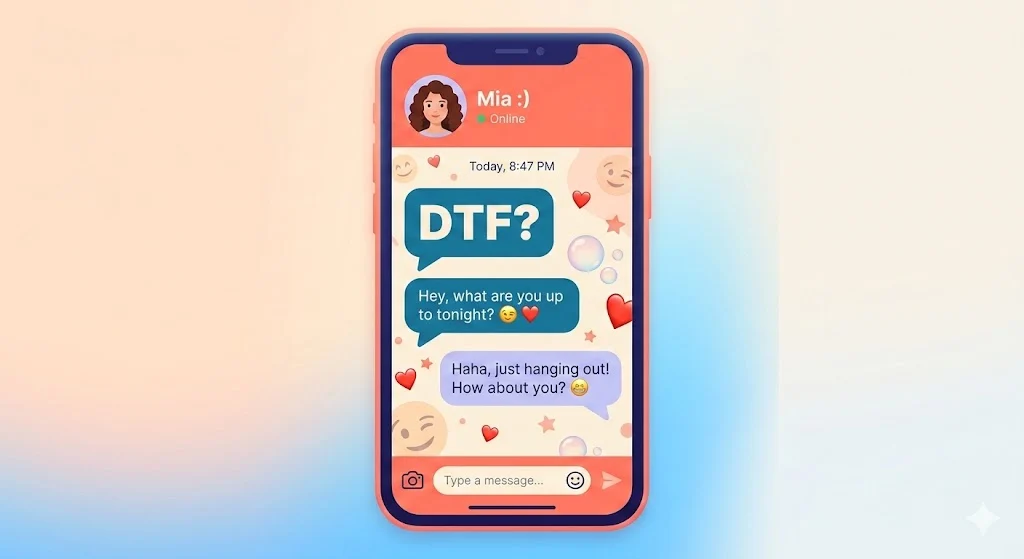
Friend 1: “Are you free tonight?”
Friend 2: “DTF 😉”
Here, it’s direct and flirtatious.
2. Dating Apps
Dating apps are where DTF is most common.
- Tinder: “Swipe right if DTF.”
- Bumble: “Looking for fun, DTF.”
Warning: DTF here is sexual and direct. Misuse can lead to blocked profiles.
3. Social Media
DTF may appear in comments, stories, or DMs on:
- TikTok
- Snapchat
Example:
“Group hangout tonight, DTF?”
Meaning: “Who’s interested in coming?”
Tone varies depending on friendship level.
4. Casual Friend Groups
Among close friends, it can be joked about:
“Movie night at my place. DTF lol”
Here, it may be playful, not serious.
Tone and Interpretation
The HMB meaning in text is neutral, but DTF is explicit. Tone changes everything.
Neutral / Playful
- Joking among friends
- Context: watching movies, hanging out, no sexual intent
Flirtatious / Sexual
- Casual dating conversation
- Direct reference to sexual activity
Risky / Aggressive
- Sent without consent
- May be interpreted as harassment
Professional and Public Communication
DTF is not appropriate in professional or public communication.
- Avoid in emails, work chat, or academic forums.
- Avoid posting publicly unless context is clear and consent is implied.
Alternative professional phrasing:
- “Are you available to meet?”
- “Are you interested in collaborating?”
DTF vs Similar Slang
Here’s a comparison of DTF with other online abbreviations:
| Slang | Full Meaning | Tone | Safe for Work |
|---|---|---|---|
| DTF | Down To F*** | Flirtatious / Sexual | No |
| HMU | Hit Me Up | Casual / Friendly | Yes |
| FWB | Friends With Benefits | Sexual / Relationship | No |
| NSA | No Strings Attached | Sexual / Casual | No |
| NGL | Not Gonna Lie | Neutral / Honest | Yes |
Understanding differences helps avoid misunderstandings.
How to Respond to DTF
Friendly / Casual Response
- “Haha, maybe later”
- “Lol, not tonight”
Flirtatious / Agreeing
- “Sure 😉”
- “I’m in”
Safety-Oriented / Boundary Setting
- “I’m not comfortable with that”
- “Let’s keep it friendly”
Tone and relationship determine your response.
Regional and Cultural Differences
DTF is understood primarily in English-speaking countries.
- US / UK / Canada: widely used in dating culture
- South Asia / Middle East: less common; often misinterpreted
- Older generations may not recognize the abbreviation
Cultural norms affect whether sending DTF is acceptable.
DTF in Gaming
Sometimes used in gaming communities for casual flirtation:
Player 1: “Join the team?”
Player 2: “Only if you’re DTF 😉”
Mostly among adult players. Young or teen players may misunderstand.
Safety and Consent Considerations
DTF is inherently sexual. Sending it requires:
- Mutual understanding
- Consent
- Age-appropriate context
Misuse can be considered harassment, so always communicate responsibly.
Frequently Asked Questions
What does DTF mean in text?
DTF stands for Down To F*** and is used to indicate sexual interest.
Is DTF rude?
It depends on context. It’s sexual, not polite in formal settings.
Can I use DTF in dating apps?
Yes, but only with consent and in adult conversations.
Is DTF flirtatious or aggressive?
Mostly flirtatious. It becomes aggressive if unsolicited.
How to respond to DTF safely?
- Agree if comfortable
- Decline politely
- Set boundaries clearly
Comparison: DTF and Other Text Abbreviations
- DTF vs HMU: DTF is sexual; HMU is casual.
- DTF vs FWB: DTF is temporary interest; FWB is ongoing arrangement.
- DTF vs NSA: Both casual, but NSA emphasizes no commitment.
Conclusion
Understanding the DTF meaning in text is essential for anyone navigating dating apps, social media, or online chats. DTF is explicit, flirtatious, and should be used carefully.
While it can be playful among friends, it is never appropriate in professional or public communication without consent. Tone, context, and cultural understanding are key to using it safely.
Digital slang like DTF shows how fast language evolves online. Knowing what it means helps you communicate effectively, avoid misunderstandings, and respond appropriately in any digital conversation.