
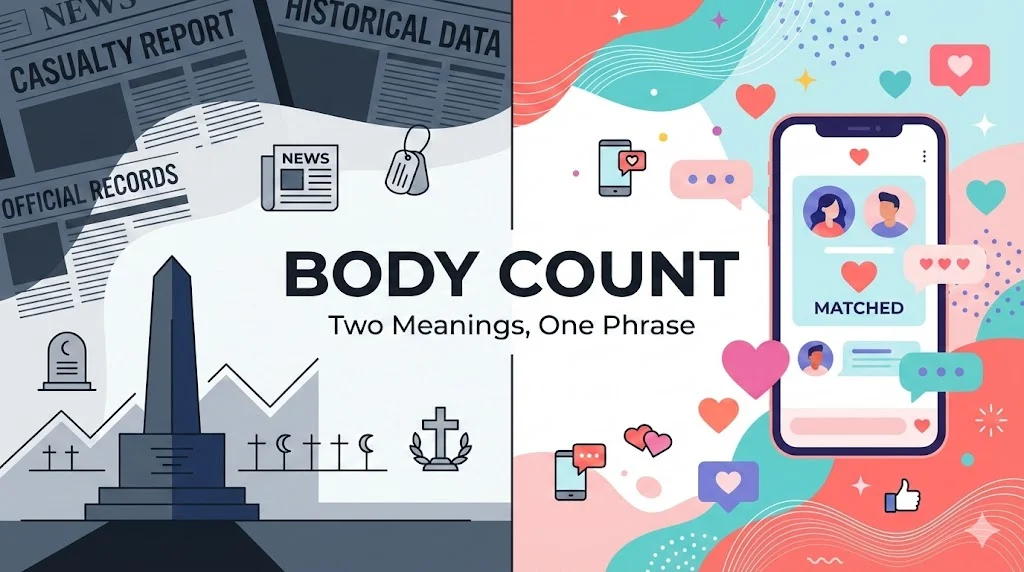

When someone asks “what does body count mean?” in 2026, the answer isn’t as straightforward as you might think. This seemingly simple phrase carries two drastically different meanings depending on the context one rooted in military and news terminology, and another that’s become increasingly popular in dating culture and social media platforms like TikTok.
In this comprehensive guide, we’ll explore both definitions of body count, examine how the term evolved, and address the cultural conversations surrounding this increasingly common phrase.
What Does Body Count Mean? The Two Definitions
Body Count Definition: The Traditional Meaning
The original and literal body count meaning refers to the number of people killed in a specific event or situation. This definition has been used for decades in:
- Military operations: Tracking combat casualties and enemy deaths
- News reporting: Documenting fatalities in disasters, accidents, or mass casualty events
- Crime scenes: Recording the number of victims in criminal cases
- Historical events: Measuring the death toll of wars, pandemics, or catastrophes
In this context, body count serves as a statistical measure—a grim but necessary metric for understanding the scale and impact of tragic events. You’ll hear phrases like “the body count continues to rise” in news coverage of natural disasters or “official body count” in military briefings.
Body Count Slang: The Modern Dating Term
The contemporary body count slang definition refers to the number of people someone has had sexual intercourse with throughout their lifetime. This usage has exploded in popularity over the past decade, particularly among Gen Z and younger millennials.
When someone asks “what’s your body count?” in a casual or dating context, they’re asking about your sexual history—specifically, how many sexual partners you’ve had. This interpretation has become so prevalent on social media platforms, particularly TikTok, that it’s often the first meaning younger people think of when they hear the term.
The Origin and Evolution of Body Count
From Battlefield to Bedroom: How Did This Happen?
The transition from body count war meaning to its sexual connotation is a fascinating example of linguistic evolution and dark humor. While the exact origin of the slang usage is difficult to pinpoint, several factors contributed to its adoption:
- Metaphorical Connection: The term was likely adopted ironically, drawing a metaphorical parallel between “conquests” in war and sexual encounters
- Shock Value: The dark humor and provocative nature of using death-related terminology for sex made it memorable and shareable
- Social Media Amplification: Platforms like Urban Dictionary (where “body count urban dictionary” entries date back to the early 2010s) helped popularize and spread the slang definition
- Viral Trends: TikTok challenges and videos discussing body count meaning TikTok propelled the term into mainstream consciousness
The body count term origin in military contexts dates back to the Vietnam War, where it became a controversial metric for measuring success. The appropriation of this term for sexual history represents a complete semantic shift—from measuring death to quantifying intimate experiences.
Body Count in Relationships and Dating
Why People Ask About Body Count
Understanding what is body count in relationships requires examining why this question comes up in the first place:
- Curiosity about sexual experience: Some people want to know their partner’s level of experience
- Compatibility concerns: Questions about similar sexual histories or values
- Insecurity: Worries about comparing to previous partners
- Judgment: Unfortunately, some use it to judge or shame others
- Conversation starter: Sometimes it’s simply casual curiosity without deeper meaning
The Controversy: Does Body Count Matter?
The question “does body count matter” has sparked intense debates across dating forums, relationship advice columns, and social media. Here are the main perspectives:
Arguments That It Doesn’t Matter:
- Past is past: What happened before the current relationship shouldn’t define its future
- Personal growth: People change, and past experiences don’t dictate current values
- Double standards: Often applied unfairly, especially toward women
- Privacy: Sexual history is deeply personal information
- Quality over quantity: The number doesn’t reflect the quality of intimate connections
Arguments That It Might Matter (To Some):
- Values alignment: Some people prefer partners with similar views on intimacy
- Health considerations: STI testing and sexual health discussions
- Emotional compatibility: Understanding each other’s relationship history
- Personal boundaries: Everyone has the right to their own dating preferences
The truth is that body count in dating matters differently to different people. There’s no universal right answer—it’s about finding someone whose values align with yours.
How to Answer the Body Count Question
Wondering how to answer body count question when it comes up? Here are some thoughtful approaches:
- Direct honesty: If you’re comfortable, simply share your number
- Boundary setting: “I prefer to keep that information private”
- Redirect: “I’d rather talk about what we’re building together”
- Counter-question: “Why is that important to you?”
- Context discussion: Share what you’re comfortable with while explaining your values
Remember: You’re never obligated to share information you’re not comfortable disclosing. A respectful partner will honor your boundaries.
Body Count Across Different Contexts
Sexual Body Count: What’s Considered High or Low?
The concept of sexual body count varies tremendously based on:
- Age: Naturally increases with time
- Cultural background: Different societies have vastly different norms
- Personal values: Religious, moral, or philosophical beliefs
- Relationship patterns: Serial monogamists vs. casual daters
- Individual experiences: Life circumstances and opportunities
There’s no objective standard for what constitutes a “high” or “low” body count. What matters most is being honest with yourself and potential partners about your values and expectations.
Body Count Number Meaning in Statistics
When discussing body count number meaning in relationships, it’s important to remember:
- Numbers don’t tell the whole story of someone’s intimate life
- Context matters (long-term relationships vs. casual encounters)
- Emotional connections can’t be quantified
- Everyone’s journey is different and valid
Celebrity and Pop Culture Influence
The term has been further popularized through:
- Music: Referenced in rap and hip-hop lyrics
- Podcasts: Dating and relationship shows discussing the topic
- Social media challenges: Viral TikTok trends about body count revelations
- Dating shows: Reality TV incorporating these conversations
The Psychology Behind Body Count Discussions
Why Body Count Creates Anxiety
For many people, discussing sexual body count triggers:
- Fear of judgment: Worrying about being seen as too experienced or inexperienced
- Comparison anxiety: Concerns about how you stack up to past partners
- Shame: Internalized societal messages about sexuality
- Vulnerability: Sharing intimate personal history
- Relationship concerns: Fear it might affect current relationship dynamics
The Double Standard Problem
It’s impossible to discuss body count without addressing the persistent double standard where:
- Men are often praised for high numbers (unfortunately perpetuated as “success”)
- Women face criticism or slut-shaming for the same behavior
- Non-binary individuals navigate complex societal expectations
This inequality reflects broader cultural issues around sexuality and gender norms that society continues to challenge and evolve beyond.
Body Count in Modern Hookup Culture
The Role of Dating Apps
The rise of hookup culture and dating apps has changed how people think about sexual partners:
- Easier access to potential partners
- Changing norms around casual sex
- More diverse relationship structures
- Increased conversations about sexual health
Generational Differences
Gen Z slang around body count differs from how older generations discuss sexual history:
- More open conversations about sex
- Less stigma around discussing numbers (in some circles)
- Greater emphasis on consent and communication
- Different relationship models (polyamory, ethical non-monogamy)
Health and Safety Considerations
When Body Count Discussions Matter Medically
From a health perspective, knowing about sexual history (not necessarily exact numbers) is important for:
- STI testing: Understanding potential exposure risks
- Sexual health conversations: Open communication with healthcare providers
- Partner notification: If infections are detected
- Prevention strategies: Making informed decisions about protection
However, healthcare professionals emphasize that the number itself is less important than:
- Consistent use of protection
- Regular testing
- Honest communication with partners
- Understanding of personal risk factors
Body Count in Military and News Contexts
Understanding Casualty Counts
The body count war meaning remains relevant in:
- Military reporting: Tracking combat losses and enemy casualties
- Humanitarian crises: Measuring the impact of conflicts
- Historical analysis: Understanding the scale of wars and battles
- Policy decisions: Informing military and diplomatic strategies
Ethical Considerations in Reporting Death Tolls
The use of body count in news raises ethical questions:
- Balancing public information with respect for victims
- Avoiding desensitization to human tragedy
- Accuracy in counting and reporting
- The human stories behind the statistics
FAQs
Is it rude to ask someone’s body count?
It depends on context and relationship stage. In new relationships, it can feel invasive. In established partnerships where both people want to share, it can be part of open communication. Always respect if someone doesn’t want to answer.
Should I lie about my body count?
Honesty is generally best in relationships, but you’re also entitled to privacy. If you choose to share, be truthful. If you’re uncomfortable, it’s better to set a boundary than to lie.
What’s a normal body count?
There’s no “normal”—it varies wildly by person, culture, age, and circumstances. Research shows wide variations, and what matters most is your own comfort level and values.
Can a relationship work with very different body counts?
Absolutely. Many successful relationships involve partners with different sexual histories. What matters is communication, trust, and shared values about your current relationship.
Why do guys ask about body count?
Reasons vary: insecurity, curiosity, wanting to understand your past, or unfortunately, judgment. How someone responds to your answer (or refusal to answer) can tell you a lot about their character.
Should body count matter in a relationship?
This is personal. For some, it’s irrelevant; for others, it’s part of compatibility. Neither perspective is wrong, but partners should respect each other’s boundaries and values.
What does body count mean on TikTok?
On TikTok, body count almost always refers to the sexual partner definition, not the death toll meaning. It’s used in trends, challenges, and relationship discussions.
How has body count meaning changed over time?
The term evolved from purely military/casualty terminology to include the modern slang about sexual partners. The slang usage has become increasingly dominant in casual conversation and social media.
Finding Healthy Perspectives on Body Count
Moving Beyond the Number
Rather than fixating on what does body count mean numerically, consider focusing on:
- Emotional maturity: How someone handles relationships and intimacy
- Communication skills: Ability to discuss sensitive topics respectfully
- Shared values: Alignment on what intimacy means to both of you
- Present connection: The relationship you’re building now
- Mutual respect: How you treat each other regardless of the past
Building Trust Without Numbers
You can build intimate, trusting relationships without ever discussing exact numbers by:
- Focusing on sexual health and testing
- Sharing relationship philosophies and values
- Discussing what you want moving forward
- Being honest about your emotional needs
- Respecting each other’s privacy and boundaries
Conclusion: Context Is Everything
The body count definition you encounter depends entirely on context. In news reports and military briefings, it tracks fatalities. In dating conversations and social media, it refers to sexual partners. Understanding both meanings helps you navigate discussions appropriately.
Whether we’re talking about body count sexually or in other contexts, remember that numbers never tell the complete story. People are complex, and reducing anyone—including yourself—to a statistic misses the richness of human experience.
If you’re in a situation where body count comes up, consider what truly matters: respect, communication, shared values, and the connection you’re building in the present. The past informs who we are, but it doesn’t have to define our future relationships.
Ultimately, body count in relationships should be discussed only when both parties are comfortable, with mutual respect and without judgment. Whether you choose to share, keep it private, or simply redirect the conversation, honor your own boundaries and values—and expect the same respect from any potential partner.
Final Thoughts: Language constantly evolves, and “body count” is a perfect example of how words take on new meanings across generations and contexts. By understanding both definitions and the conversations surrounding them, you’re better equipped to navigate these discussions with nuance, respect, and clarity.