
Have you ever received a message that simply says “asl?” and stopped for a second wondering what it actually means? You are definitely not alone. This short slang term appears everywhere today, especially in online chats, social media messages, gaming platforms, and dating apps. Many users feel confused, uncomfortable, or unsure how to reply when they see it for the first time.
Understanding ASL meaning slang is important because it is not just another casual abbreviation. It can be friendly, neutral, or sometimes inappropriate depending on context, platform, and who is asking. Teenagers, young adults, and even professionals may encounter ASL while chatting online, yet its usage rules are rarely explained clearly.
In this detailed guide, we will explain the meaning of ASL in slang, where it comes from, how it is used today, and when you should or should not respond. We will also cover common mistakes, regional differences, professional considerations, and safe alternatives. By the end, you will fully understand ASL and know exactly how to handle it in any situation.
Definition & Meaning of ASL Slang
ASL is a slang abbreviation that stands for Age, Sex, Location. It is commonly used as a question, usually written as “asl?”, to ask someone basic personal information in online conversations.
Simple Definition:
ASL means asking someone their age, gender, and location.
Why People Use It:
- To quickly get to know someone online
- To decide how to continue a conversation
- To check compatibility in chats or dating apps
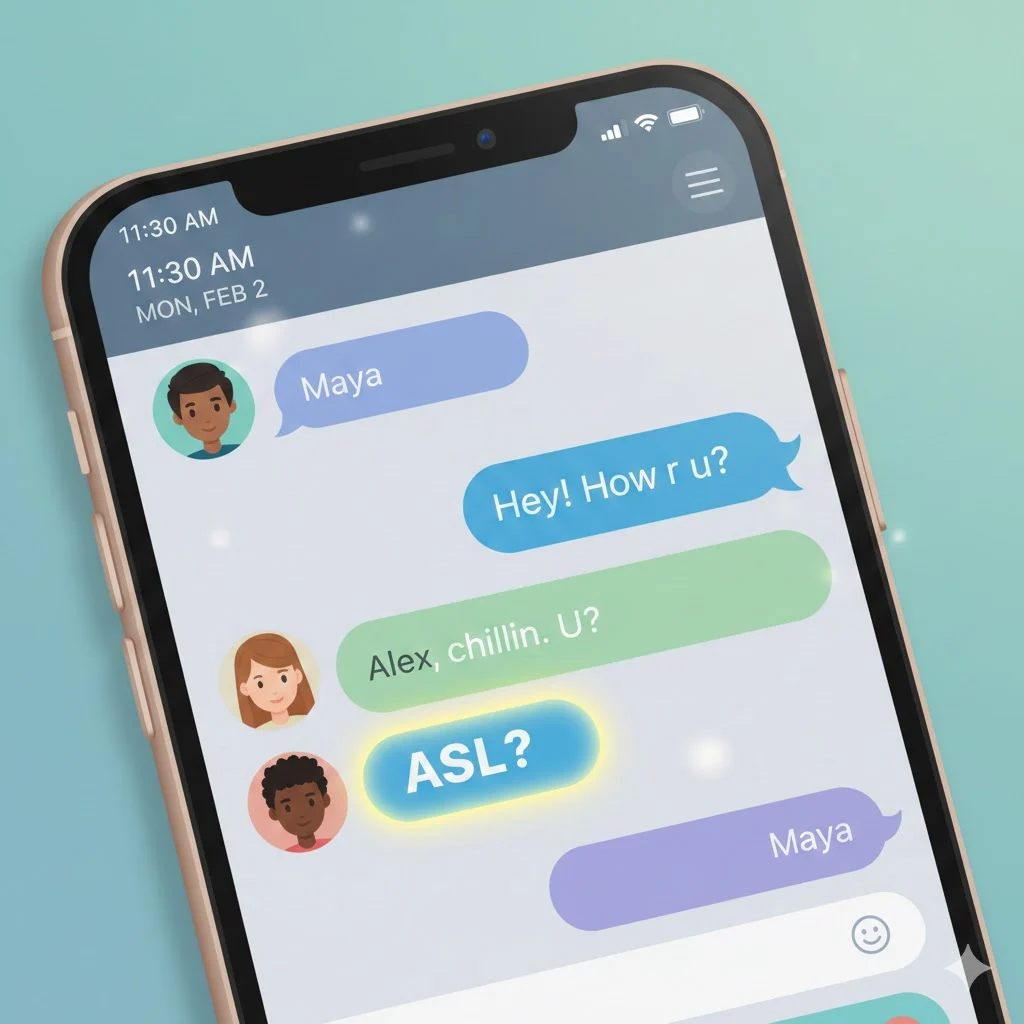
Example in a Casual Chat:
Alex: Hey
Sam: Hi
Alex: asl?
In this case, Alex is asking Sam for age, gender, and location.
Important Points to Remember:
- ASL is informal and conversational
- It is mostly used with strangers online
- Context decides whether it feels normal or intrusive
Synonyms or Similar Meanings:
- Age gender location
- How old are you, are you male or female, where are you from
- Basic profile info
Although ASL is short and convenient, it can feel too personal if used at the wrong time or place.
Background & History of ASL
The slang term ASL originated during the early days of the internet, particularly in chat rooms and instant messaging platforms of the late 1990s and early 2000s.
Where It Started:
- AOL chat rooms
- Yahoo Messenger
- IRC channels
Back then, online profiles were limited. Users did not have profile pictures or bios, so asking ASL became the fastest way to understand who you were talking to.
How It Evolved:
- Initially very common and normal
- Became associated with strangers and anonymous chats
- Now used mostly in dating apps, gaming chats, and casual online platforms
Cultural Shift:
Over time, people became more aware of online privacy. As a result, ASL started to feel intrusive in some contexts. Today, many users prefer to share information gradually instead of answering ASL directly.
Usage in Different Contexts
ASL can mean different things depending on where and how it is used.
Casual Online Chats
In random chats or forums, ASL is often the first question asked.
Example:
Stranger: Hey
You: Hello
Stranger: asl?
This usage is common but not always welcomed.
Social Media
On platforms like Instagram, Snapchat, or Facebook Messenger, ASL is less common but still used.
Example:
“Nice pic. asl?”
This may feel uncomfortable if there is no prior conversation.
Gaming Platforms
In multiplayer games, ASL may be asked out of curiosity.
Example:
Player1: GG
Player2: Thanks
Player1: asl?
This is usually harmless but still optional to answer.
Dating Apps
ASL is very common on dating apps, though often implied rather than directly asked.
Example:
“So, asl?”
On dating apps, it is generally expected, but users still prefer polite phrasing.
Professional Communication
In professional environments, ASL slang should be avoided completely.
Why It Is Inappropriate:
- Too informal
- Invades privacy
- Sounds unprofessional
Wrong Example:
Hello, asl?
Correct Alternative:
May I ask where you are based and your professional background?
In workplaces, emails, interviews, or LinkedIn messages, ASL has no place.
Hidden or Risky Meanings
While ASL itself is not offensive, it can become risky depending on intent.
Potential Issues:
- Can feel creepy if asked too early
- May signal romantic or sexual interest
- Can be used by scammers or fake profiles
Risky Example:
asl? send pic
This combination is a red flag and should be avoided.
Safe Usage:
- Only ask after building conversation
- Respect boundaries
- Accept if someone does not want to answer
Synonyms & Related Phrases
People may ask for ASL indirectly using these phrases:
- How old are you?
- Where are you from?
- Are you male or female?
- What city are you in?
- Tell me about yourself
Indirect questions feel more polite and safer than asking ASL directly.
Common Mistakes to Avoid
Many users misuse ASL without realizing it.
- Mistake 1: Asking ASL immediately
This feels abrupt and impersonal. - Mistake 2: Asking ASL in professional chats
This looks unprofessional. - Mistake 3: Pressuring someone to answer
Not everyone wants to share personal details. - Mistake 4: Assuming ASL is harmless everywhere
Context always matters.
Better Approach:
Start a conversation first. Let details come naturally.
Examples in Casual, Professional & Legal Contexts
Casual Context
Person A: Hi
Person B: Hello
Person A: asl?
Acceptable but optional.
Professional Context
ASL should never be used.
Correct alternative:
Could you please share your location and experience level?
Legal or Formal Context
ASL is never used in legal documents or formal communication.
Formal replacement:
Personal details including age and residence may be required as per policy.
How to Respond to ASL
Your response depends on comfort level.
Casual Response
- 22, male, NYC
- 19 f UK
Funny Response
- Old enough, human, Earth
- 25, awesome, somewhere cool
Privacy Conscious Response
- I prefer not to share that yet
- Let’s chat first
Professional Response
- Ignored or redirected politely
Comparison with Similar Slang
| Slang | Meaning | Usage |
|---|---|---|
| ASL | Age Sex Location | Chat, dating |
| DM | Direct message | Social media |
| IRL | In real life | Casual |
| BRB | Be right back | Chat |
ASL is more personal than most slang terms.
Regional & Cultural Differences
United States:
ASL is widely recognized but often considered outdated or creepy if misused.
United Kingdom:
Less commonly used. People prefer indirect questions.
India & South Asia:
ASL is used mostly on dating apps and gaming chats.
Middle East:
Asking ASL directly may be considered inappropriate.
Europe:
Privacy-focused cultures dislike direct ASL questions.
Understanding cultural sensitivity is very important before using ASL.
ASL in Modern Online Culture
Today, many users avoid ASL and rely on profiles instead. Bios, avatars, and interests have replaced direct questioning. However, ASL still exists in anonymous spaces.
FAQs
Q1: What does ASL mean in slang?
ASL means Age, Sex, Location.
Q2: Is ASL rude?
Not always, but it can feel intrusive.
Q3: Should I answer ASL?
Only if you feel comfortable.
Q4: Is ASL used on dating apps?
Yes, but polite alternatives are preferred.
Q5: Can ASL be dangerous?
It can be risky if combined with pressure or requests for photos.
Q6: Is ASL outdated?
Somewhat, but still used in certain online spaces.
Conclusion
Understanding ASL meaning slang helps you stay safe, confident, and aware while chatting online. While ASL simply asks for age, gender, and location, its impact depends heavily on timing, platform, and intent. In casual chats, it can be harmless. In professional settings, it should be avoided.
Always remember that you are not obligated to share personal information online. Use ASL carefully, respond wisely, and respect boundaries. Mastering this slang will help you navigate modern digital conversations with clarity and confidence.